

November 2026
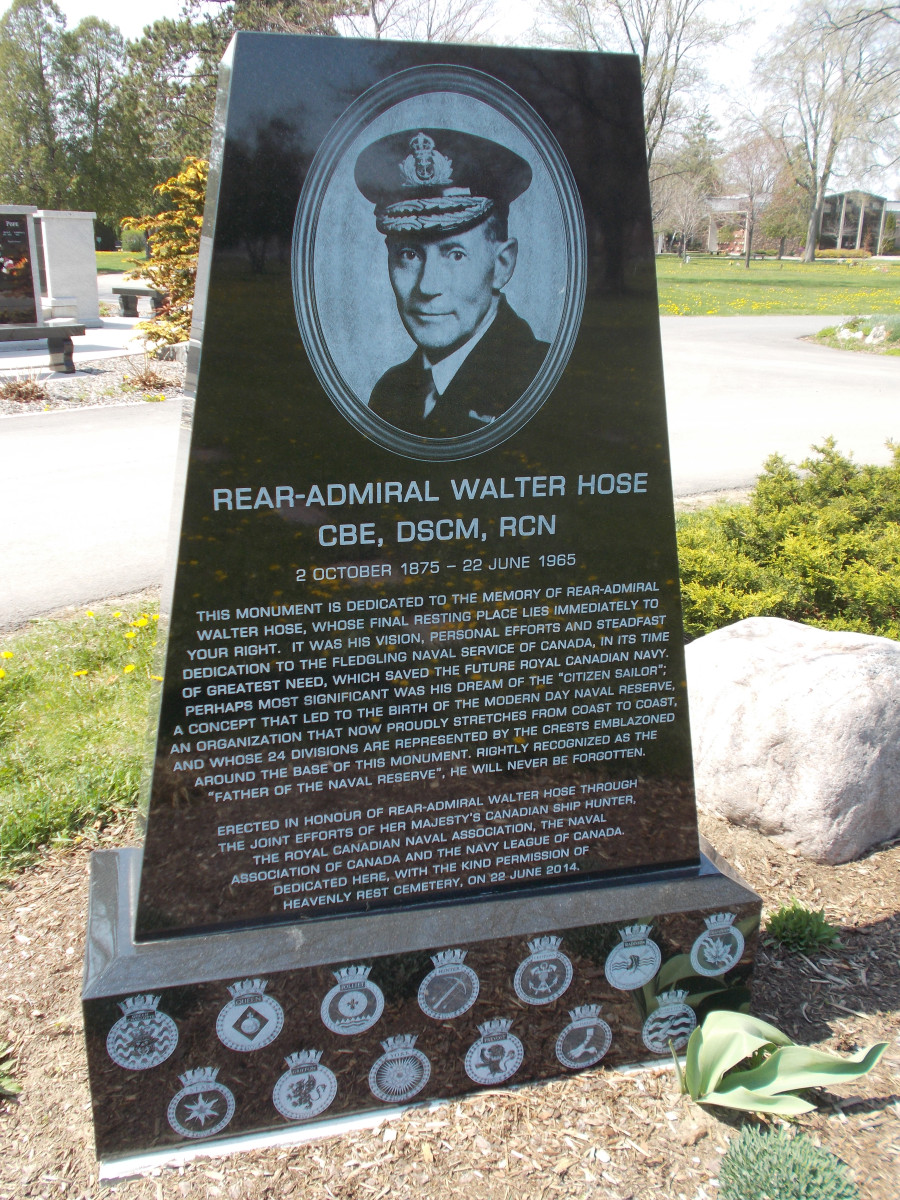
In the history of the Royal Canadian Navy (RCN), many notable Canadians have worn the uniform. Rear-Admiral Walter Hose, who along with Admiral Sir Charles Kingsmill, is considered one of the founding fathers of the RCN in 1910. Thirteen years later, Rear-Admiral Hose would go on to found a naval reserve element.
Officially designated the RCN Volunteer Reserve (RCNVR), it was colloquially known as the “Wavy Navy” due to due to the wavy sleeve stripes worn by naval officers, as opposed to the straight stripes worn by regular navy officers. In the post-war years, the Navy was facing severe budget cuts. RAdm Hose saw the establishment of a reserve force as a great way to build public support for the still-young RCN, along with to supplementing the regular force navy.
With an initial authorized strength of 1,000 all ranks, twelve Naval Reserve Divisions stood up in major cities across Canada by the end of 1923.
The RCNVR would go on to become the anchor for the Canadian Navy, serving as recruiting vehicle for the RCN, something that would prove very useful in 1939, when the RCNVR was used to recruit and build the RCN into the powerful navy it became during World War II.
If not for the vision and hard work of RAdm Hose, the RCN would have been a very different navy. By the end of the war, Canada had the third largest navy in the world, with a complement of nearly 100,000, with most being members of the RCNVR.
RAdm Hose, the son of Anglican bishop George Frederick Hose, was born on 2 October 1875 on a ship in the Indian Ocean, which seems fitting given his chosen profession, He joined the Royal Navy in 1889 at the age of 14, and rose up through the officer ranks. Hose was promoted to Lieutenant on 31 December 1897 and Commander on 31 December 1908. He held six commands, including commanding gunboats in Asia and a torpedo gunboat with the Royal Navy Home Fleet. In November 1902, Hose was sent to Canada, where he was appointed to HMS Charybdis, where he trained men for the Newfoundland Royal Navy Reserve.
Realizing his career advancement was limited in the Royal Navy, Hose chose to resign his commission and join the RCN in 1912, where he retained command of HMCS Rainbow, stationed at HMCS Naden in Esquimalt, a ship he commanded under the Royal Navy.
In 1912, Hose recommended to Rear Admiral Sir Charles Kingsmill, then Director of the Naval Service, that like the army, the RCN would benefit from a volunteer citizen navy trained at local naval reserve divisions across the country, providing trained personnel to bolster the ranks of the navy. While Hose’s idea was met with little enthusiasm, he pressed ahead and created an unofficial volunteer navy with a group of businessmen and yachtsmen from Victoria who were given access training facilities and instructors at HMCS Naden.
With the outbreak of WWI in 1914, these unofficial naval volunteers became the core of an 8,000-man Royal Canadian Naval Volunteer Reserve. While this first version of the RCNVR didn’t last past the war, Hose was not done with the idea.
After Admiral Kingsmill retired, Hose replaced him as the Director of the Naval Service in 1922. The following year, the RCNVR was officially established as a permanent element of the RCN. After World War II, the volunteer reserve was re-named the RCN Reserve.
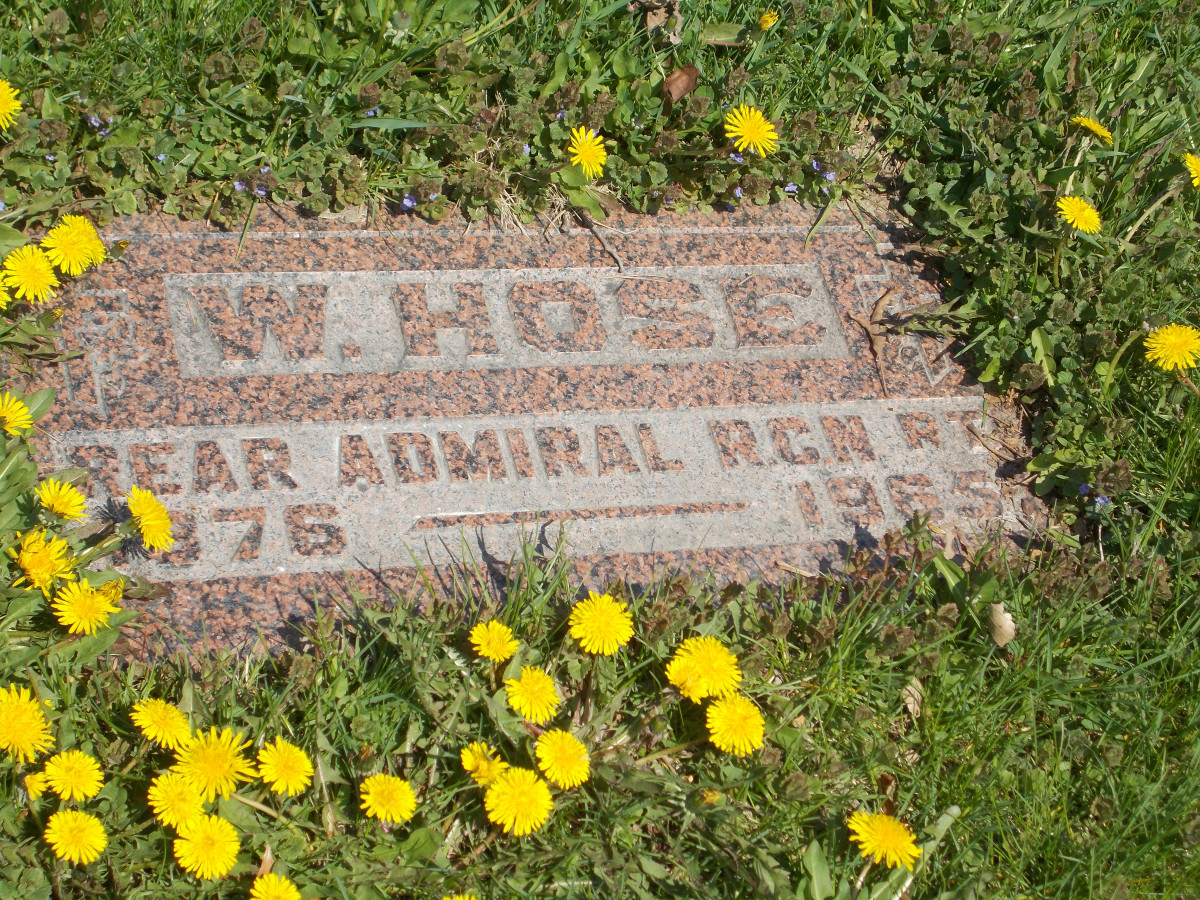
RAdm Hose served as the the Director of the Naval Service, re-named the Chief of the Naval Staff in 1928, until his retirement from the RCN in 1934. He died in 1965 in Windsor, Ontario, receiving a full military funeral with six Petty Officers from HMCS Hunter, the Naval Reserve Division in Windsor, acting as pallbearers. He was interned at Heavenly Rest Catholic Cemetery.
A monument at Point Pleasant Park in Halifax, Nova Scotia, honours his work saving and building the Royal Canadian Navy during the difficult years after World War I and through the Great Depression.
Sources: Walter Hose – Wikipedia, Royal Canadian Naval Volunteer Reserve – Wikipedia.

