

October 2026
What a difference a year makes. Or not! It seems very little has changed or been accomplished in the never-ending tale of whether children were murdered and clandestinely buried in unmarked graves at former Indian residential schools.
Far too many try to conflate other issues into the overall narrative of the residential schools, branding any counter-opinions as “denialism,” and the usual nugget of racism, which is not helpful. Yes, children were mistreated. Yes, some children died while attending the residential schools of diseases common for the day, especially before the advent of modern medical practices.
What I take issue with is the accusation that children were murdered, something for which there is currently no evidence beyond a reasonable doubt that anything even close to murder happened, let alone the “mass grave” allegation that led to the burning of numerous Christian churches across Canada, some whose congregants were Indigenous, and the lowering of our national flag to half-mast for six months, and act that effectively rendered the gesture meaningless.
I even question the allegation of genocide, a word that has been overused and/or misused in relation to things like the Israel-Gaza conflict. One of the elements of genocide as defined in the 1948 Convention on the Prevention and Punishment of the Crime of Genocide is “Forcibly transferring children to another group,” something that certainly fits here. However, while we can debate whether one of the stated goals of the residential schools was to ‘beat the Indian out of the Indian,” or simply a misguided attempt to give them a chance in the modern world. Besides the fact that two things can be correct at the same.
It seems pretty obvious that the method the government used had some horrific and destructive methods, there is a good argument to be made that the end result of having an Indigenous population educated in the modern ways was a good thing overall. What would life be like for Indigenous people today if they hadn’t received the same education that other Canadians of all races and ethnicities received? Would we have all the prominent Indigenous Canadians in leadership roles in government and the private sector? Would we have Indigenous CEOs, artists, doctors, lawyers, broadcasters, entertainers and university professors?
Given the current narrative, you would think that there was absolutely nothing positive about residential schools. In a recent column, Canadian/British writer and former newspaper publisher Conrad Black points out that “Many former students have gone on record to speak fondly of their time at these schools, describing how they learned carpentry or another trade, received an education, learned a language, forged friendships, and embarked on career paths they could not have otherwise. Former students have praised the quality of the instruction and in some cases credited the schools with putting them on a path to becoming teachers themselves, where they went on to make a difference within their communities.
Black specifically cites Len Marchand, “Canada’s first Status Indian MP, who attended the residential school in Kamloops at the time the mass graves were being dug, wrote that he ‘was never abused, and… never heard of anyone else who was mistreated.’ and other “…highly respected and accomplished Indigenous figures, including Cece Hodgson-McCauley and Tomson Highway, who attended residential schools in different parts of the country decades apart, independently described their school years as among the best of their lives.“
Let’s not forget that some Indian reservations requested residential schools be build on their territory to educate their children, as they didn’t have the resources to do it themselves, something that that governments are legislatively required to provide. Black notes that “One could imagine that had the government deprived large numbers of Native children of an education, they would face a different sort of accusation of discrimination. The reality was that many native families were scattered across remote, sparsely populated areas, where it was not possible for schools to be built. Residential schools were the only logistically viable option. And the great majority of the students were enrolled by their own parents, not forcefully torn from their arms.“
Black also addresses the issue of the physical abuse suffered by some students, noting that corporal punishment for disciplinary purposes wasn’t unique to Indian residential schools, but common across boarding schools in Britain and the Commonwealth at the time. That doesn’t make any of it right, especially sexual abuse, but corporal punishment for disciplinary reasons was a lot more common back then than it is now.
One of the best ways we can actually achieve reconciliation as we are all supposedly seeking to achieve is to have constructive dialogue between indigenous and non-indigenous, something that seems to be lacking these days. Most people prefer to shout insults and talk over each other. Those on the political far-left prefer to call you a racist or Islamaphobe/homophobe/transphobe/white supremacist (even if you aren’t white), and son on, as they frequently have nothing to back up their opinions other than feelings (the truth doesn’t care about your feelings). I tried to engage with several people on Facebook who commented on posts perpetrating some of the lies and misconceptions of the residential school issue, without acknowledging many of these are unproven allegations.
Some will ask why we should dig up bodies of murdered children? Well, if you are going to accuse a county of complicity in murder, there is an expectation that you can prove that accusation, so there’s that.
I tried to have constructive discussions with people of various Facebook forums discussing Truth and Reconciliation Day, with mixed to poor results:. I don’t think I changed too many minds, as many ideologically-driven people fail to see the forest for the trees. You can read my interactions below:

David Beaulieu – According to colonial practice you can disturb & exhume a body HOWEVER in Spiritual practices, death is Sacred. Indigenous/ anishinaabe do not dig up a grave whether a insidious crime has been committed by a sick racist narcissistic perpetrator/sexual abuser, which by in large has been committed by priests , nuns and boys & girls supervisors including principals if the day at any IRS. Written by a lived experience anishinaabe who attended as a day scholar but believes the atrocities fid occur.
Bruce Forsyth to David Beaulieu, so you didn’t actually see anyone being murdered and clandestinely buried in a field? Do I have that correct?
In relation to the above, Arv Blacksmith, a digital creator from Cross Lake, Manitoba posted:
Arv Blacksmith to Bruce Forsyth – my kokom did and ill always believe her.
Bruce Forsyth to Arv Blacksmith, when and where did your Kokom witness children being murdered? There is no statute of limitation on murder, so if the murderers are still alive, they can still be prosecuted. Of course, without any corroborating evidence, especially physical or documentary, a conviction would be harder to get. Witness testimony is the weakest kind of evidence you can have in a court of law. Sometimes it’s all you have, so you go with it and hope that the witnesses are convincing enough and there is no contradictory evidence.
Although there are certain exceptions, witness testimony also needs to come directly from the person who witnessed the event, otherwise it’s considered hearsay evidence and is inadmissible. Unless your Kokom is still alive or recorded this information in a format that can’t be altered if not alive, it’s of little value. The truth really doesn’t matter, nor does psychic abilities. It only matters what you can prove beyond a reasonable doubt, and so far, no one has produced any evidence of any murders committed at any of the former residential schools across Canada by priests, nuns or anyone else.
As of this date, no bodies of murdered children have been found, especially at the few former schools that have undertaken excavations of suspected grave locations. Were children really murdered and clandestinely buried? We don’t know. Yes, children were abused and mistreated at the former residential schools and some even died of natural causes from common diseases of the day, especially before the advent of modern medical practices, but murdered? I’ll need more than the word of your Kokom.
*************************************************************************************************************
Dr. Candace Manitopyes – Founder and CEO of Relentless Indigenous Woman Co., a consulting firm, posted:
Wow!!! My last two posts about Indian Boarding Schools really triggered the trolls!! 
Good!! But, they won’t silence the truth!!
Stand with Indian Boarding School survivors: SHARE A PHOTO IN THE COMMENTS with your orange shirt and help amplify their voices. 
Truth isn’t supposed to make everyone comfortable.
So let’s do something that they can’t argue with: OUR PRESENCE.
Let’s fill this space with orange shirts.
If you need a shirt, you can purchase it here. https://nabshc.myshopify.com/
If you’re in Minneapolis, come join us on September 30th.
In response, I tried to engage her in a debate, but she didn’t respond. Her comments on her posts are restricted to those who follow her page, so I wrote to her through her company e-mail, addressing certain points she made, particularly the highlighted portion below:
Hello Dr. Manitopyes,
I read your post on Facebook but as I don’t subscribe to your page, I’m responding to you here. I’m not hiding behind a fake name. I am a real person with real opinions that I can back up with intelligent and informed arguments, not just feelings and emotion. Facts don’t care about your feelings and neither does the truth. People can disagree with my opinions. I only ask that they rebut them with an intelligent and informed counter argument.
Let’s get one thing straight first off: I’m not a residential school denier. I want the truth. Yes, horrible things did indeed happen at the former residential schools, but there is currently no evidence that children were murdered and clandestinely buried in unmarked or mass graves, as the current narrative states. We need the truth to be told, regardless of what the truth is in the end.
(Manitopyes wrote) “Why are we normalizing digging up our bodies to make the colonizer comfortable? Do you know how fkd up that sounds? Like actually sit with that and think about it… what if it was your relative? Your sister? Your child?” I understand the anger you must have as an Indigenous woman, but it’s a pretty divisive statement when you start with “colonizer.” Why would we want to dig up bodies? Well, for one thing, to find out if the “anomalies” that were found at the former Kamloops school are actually the bodies of murdered children, as the accusation goes, or whether it’s an old septic bed, as has been suggested by some familiar with the property, so there’s that. If the body of one of my ancestors was buried in that field in Kamloops, or any of the former residential schools, I would want to know and possibly repatriate their remains to their home First Nation for a proper burial.
You are absolutely right that “There shouldn’t have been ONE,” but the question that I ask is was there indeed ONE child who was murdered, or were none murdered?
I find it incredibly insulting and destructive when lies are presented as the truth and you can’t debate and call out those lies without being called racist or a denier. There is no such thing as “my truth,” or “your truth.” There is only “The Truth.” Period.
You would think that the fact that no bodies have been found would be a great relief, seeing as that could mean no children were murdered and clandestinely buried. Instead, it appears there is too much money and power involved in keeping the murder narrative going, such as the over $12 million in taxpayer money given to the Tkemlups te Secwepemc First Nation for an excavation that has not happened as of today. Why not?
Are there any First Nations across Canada that have records of children who went to a residential school and simply vanished? If so, what efforts were undertaken then and now to determine what happened to them? If not, why? It’s a well-documented fact that many students and adults died at the residential schools from influenza, tuberculosis, or from the many of the common diseases of the day that killed many people before our current medical advances. For a variety of reasons, some were not repatriated to their home Nations for burial.
It’s also possible that there are some graves that were once properly marked, along with being properly recorded, but have lost their marker for a variety of reasons. Thus, it may not be exactly truthful to say that they were purposely buried in unmarked graves or “mass graves” as was originally reported.
Now Minister of Crown–Indigenous Relations Rebecca Alty recently announced her government will be spending another $5 million on “education?” Will this education include all aspects of this admittedly shameful part of Canada’s history, good and bad, or just the “facts” that suit her and your agendas? I want THE TRUTH, whatever that truth may be, not lies. I further don’t want to be labeled a criminal for allegedly “denying” what happened at residential schools (murder and clandestine burials), when I’m simply asking for the truth, so let’s not go down that road.
I spent over 20 years as a cop. In order to get a conviction in a court of law, you need to prove the offence beyond a reasonable doubt. Further, the truth really doesn’t matter. It only matters what you can prove beyond a reasonable doubt. I know you will tell me that there are many stories out there, some told by former students, but if I’m going to be painted as being complicit in the murder of Indigenous children simply because I’m a white, second generation Canadian of British heritage, I’d like more than just an oral story with absolutely nothing else to substantiate that accusation.
As that great Canadian and master of both official languages, former Prime Minister Chrétien famously said, “A proof is a proof. What kind of a proof? It’s a proof. A proof is a proof. And when you have a good proof, it’s because it’s proven.”
By the way, there is no statute of limitation on murder, so if the murderers are still alive, they can still be prosecuted. If you or anyone you know if the Indigenous, Inuit or Metis communities have any evidence to substantiate the accusations of murder, please contact your local police service with that information.
You say on your web site “…bringing education and hard truths to light.” I’d ask you to live up to that motto, especially the hard truths.
I look forward to your response.
Dr Gerry Ebalaroza-Tunnell – Founder of Co3 Consulting, LLC, posted:
I still can’t believe how much attention this post got: 15.5K reached and 1.4K reactions, comments, and shares.
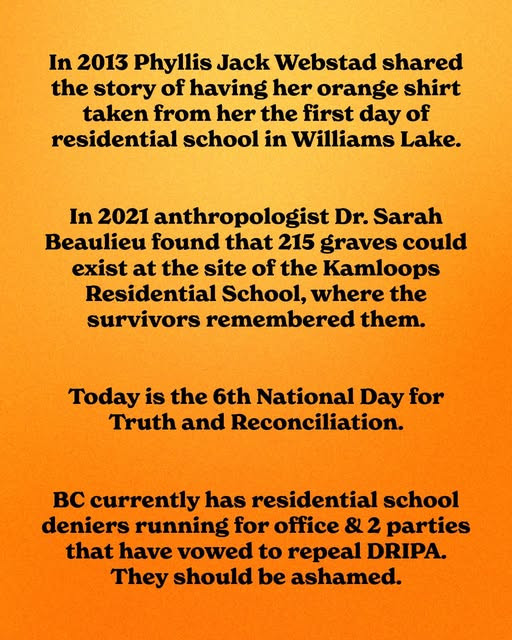
Yeah, some are bots. Trolls are gonna fucking troll. But what’s harder to stomach is the DENIAL; the deliberate refusal to face a history simply because the truth is too fucking uncomfortable!!
I keep seeing: “Where’s the evidence?”
Wrong fucking question.
The federal government has already documented 417 Indian boarding schools, at least 973 child deaths, and at least 74 marked and unmarked burial sites.
The questions we should be asking are:
Where are the children?
Why did so many never come home?
And where the fuck are they buried?
September 30 is the National Day of Remembrance for Indian Boarding School Survivors, a day to honor the children who never returned home, the survivors who did, and the families and communities still carrying what happened.
***********
In response, I posted this comment:
Dr. Gerry, I’m hoping that we can have a civil discussion, one where we may have to agree to disagree, but maybe we can get some answers and understanding from each other. This is an incredibly divisive issue and it doesn’t have to be as such. We should all be united here in the search for the truth, regardless of what the truth may be in the end. Another thing to keep in mind is that the truth doesn’t care about your feelings. I don’t like that our Indigenous brothers and sisters have been treated horribly over the centuries by Europeans settlers, including at the residential schools, but it’s the truth. It’s also the truth that not all Europeans treated Indigenous Peoples horribly.
Two things can be true at the same time. It’s true that horrible things happened at the residential schools, but it’s also true that as of this point, there is no evidence beyond a reasonable doubt to substantiate the horrific allegation that children were murdered by Priests and Nuns and then clandestinely buried in unmarked graves to cover up the crimes.
Like many Canadians back in 2021, I mourned the children “discovered” at Kamloops. I took my daughter to the makeshift memorial that popped up in my city. I even took the time to visit the former Spanish Residential School, west of Sudbury, where I left a note repeating a phrase I heard that touched me to my soul: “…and a small voice whispers, ‘They found us.’” I was proud to have been included in a smudging ceremony that took place while I was visiting the remains of the former school. Now I can’t help but feel that it was all a lie (Kamloops “murders,” not that children were abused).
The anomalies that were detected by ground penetrating radar (GPR) were presented as proof that there are indeed bodies buried at Kamloops, because those using the GPR are professionals and can’t be wrong with their interpretation, right? It’s not possible that these anomalies certainly are “rocks or gophers,” right? This is sadly erroneous, as it completely ignores the fact that the images created the GPR units aren’t as clearly defined as an X-ray at your doctor’s office. Are they bodies, rocks, or as suggested by some, are part of an abandoned sewage system? Bottom line, we don’t know what’s under the ground until we excavate. Even the Tkemlups te Secwepemc band council and Dr. Sarah Beaulieu, the scientist who discovered these unmarked “graves” have both backed off the claim that there are indeed bodies there and instead refer to the discovery as “anomalies.”
You may feel that we shouldn’t have to exhume the bodies of these mistreated children, but it’s the truth that if we want to determine if children were indeed murdered and clandestinely buried in “unmarked mass graves,” in a field at the Kamloops Residential School, and other former schools, then we have no other choice.
Of the sites that have been excavated, like the Pine Creek Residential School in Manitoba, nothing has been found to indicate that children were secretly murdered and buried. So, is it denialism to ask why no bodies have been found? Of course not.
Even if there are indeed bodies buried at Kamloops, that doesn’t mean they were murdered. It’s a well-documented fact that many students and adults died at the residential schools from influenza, tuberculosis, or from the many of the common diseases of the day that killed many people before our current medical advances. For a variety of reasons, some were not repatriated to their home Nations for burial. How many of those students were buried locally, in proper graves that may or may not still have a marker on the grave, along with being properly recorded in church or municipal records?
You would think that the fact that no bodies have been found would be a great relief, seeing as that could mean no children were murdered and clandestinely buried. Instead, it appears there is too much money and power involved in keeping the murder narrative going, such as the over $12 million in taxpayer money given to the Tkemlups te Secwepemc First Nation for an excavation that has not happened as of today. Why not?
We need to find if there were indeed children who were murdered and buried in unmarked graves, even if those responsible are long dead and will never see the inside of a courtroom. If no such crimes happened, then we need to stop perpetuating that narrative. I should hope that all First Nations across Canada want the truth too. Do you?
***********
Without responding directly to me, Dr. Gerry posted this comment to all the people posting their disagreements with her:
***********
DrGerry Ebalaroza-Tunnell – 18 September
Daaang… apparently my last post about wearing an orange shirt made some folks BIG MAD. 
The irony is fucking delicious. Grown-ass adults rage-typing dissertations from behind their keyboards because a Native woman put on an orange shirt and dared to speak truth about documented boarding-school history.
Imagine screaming “GET OVER IT!” while being completely unable to get over me talking about it. 
But please, keep commenting. You’re boosting the post while proving my point. THANK YOU!!
In fact, here’s another shirt for y’all to get BIG MAD about.
Because if the truth makes you this uncomfortable, I clearly need to wear it louder!!
Can’t wait to see what the trolls will drag out!! 
***********
Well, I don’t feel too bad. Apparently, even fellow Indigenous posters don’t seem to be buying what Dr. Gerry is selling:
Billy Ive to DrGerry Ebalaroza-Tunnell – B S
DrGerry Ebalaroza-Tunnell to Billy Ive – Keep slithering, Billy Boy!!
Billy Ive to DrGerry Ebalaroza-Tunnell – FO Doc, I went to boarding school, did YOU?
Garth Stonechild to DrGerry Ebalaroza-Tunnell – I’m taught by my Elders to pray for fools like you!
DrGerry Ebalaroza-Tunnell to Garth Stonechild – Then perhaps you should listen more closely to your Elders, because I doubt they taught you to use prayer as an insult. If your prayer needs contempt to land, it might be you who needs it most. Bless you, my child!
Dan Arr to DrGerry Ebalaroza-Tunnell – You were never in attendance at a residential school.
DrGerry Ebalaroza-Tunnell to Dan Arr – And your point?

Belinda Sayeay, Indigenous Transition and Learning Advisor at Fanshaw College posted:
Belinda Sayeau – I am the proof. Come talk to me.
Bruce Forsyth to Belinda Sayeau, I’m here to listen. The following post is for Dr. Gerry, but maybe you would also be willing to address the points I make, seeing as no one else wants to address my points:
You say that you don’t want to stop talking, yet you don’t want to talk to anyone who has a different opinion. When I say different opinion, I’m taking specifically about the unproven allegation that 215 bodies were found in Kamloops. I’m talking specifically about cold-blooded murder and children clandestinely buried in an orchard, or those supposedly embedded in basement walls, or cremated in furnaces. As of this date, there is no proof beyond a reasonable doubt that could lead to a conviction in a court of law that any of that happened.
Yes, residential schools existed. Yes, children were abused. Yes, children died of natural causes from common diseases of the day. Yes, some children were properly buried in graves at or near the residential school, graves that were properly recorded, instead of returned to their home Nations for burial for a variety of non-nefarious reasons.
Yes, some of those graves no longer have markers for a variety of non-nefarious reasons and yes, some of the municipal or church records documenting the burials have been lost for a variety of non-nefarious reasons. Yes, some families weren’t notified of the deaths, nor the burial location, for a variety of non-nefarious reasons. Stop conflating these two separate issues. It does nothing to further understanding and reconciliation. We can’t have reconciliation without truth.
“Where are the children? Why did so many never come home? And where the fuck are they buried?” Well, it’s possible questions like these will be answered if the the Tkemlups te Secwepemc First Nation conducted an excavation of the location of the anomalies found by Dr. Sarah Beaulieu.
BTW, both the band council and Beaulieu have backed off the “bodies” allegation and now use state anomalies. We may find the remains of long-lost children, or we may find out the “215 bodies” allegation was all a lie. I fail to understand why someone with a PhD can’t comprehend this, nor why you seem afraid to debate me. I only have a B.A. I do read a lot, so there’s that.
Are you up to the challenge of debating me, or are you just going to call me a racist, colonizer and denier, and then delete my post? I’m always trying to gain knowledge and you seem reluctant, or incapable, of forming a reasonable and informed counter-argument. You have a chance to point out to me why you think I’m wrong and maybe change my mind. Does that sound like a denier to you?
*************************************************************************************************************

In relation to a speaking event hosted by Canadian Students for Free Speech at the University of Calgary, featuring an open discussion forum with U of C Professor Emeritus Dr. Tom Flanagan and Rebel News reporter Drea Humphrey, the following was posted by CTV News:
The University of Calgary hosted a debate about whether Canada’s residential school system should be called genocide… just one day before the National Day for Truth and Reconciliation.
The event happened on September 29 in the Science Theatres atrium. Professor emeritus Tom Flanagan and Rebel News reporter Drea Humphrey took part. Canadian Students for Free Speech organized it.
Indigenous students said the event was very hurtful.
“This is not a debatable topic. This is not free speech. This isn’t something that is debated,” said Indigenous student Mizze Walker, whose father attended Shingwauk Residential School.
Another Indigenous student, Jay Maudsley, called the event “sickening.” He said his family was directly affected by residential schools and still lives with those impacts today.
Organizers said the event was meant to encourage discussion about the historical record and whether the word “genocide” should be used for residential schools.
Flanagan said holding the event right before the National Day for Truth and Reconciliation made it a good time for this discussion.
“I think the days surrounding the National Day are a good chance for discussion because people’s attention is drawn to the issue,” he said.
He also disagreed with several common descriptions of the residential school system. He questioned claims about possible unmarked graves at the former Kamloops Indian Residential School and said some reports have overstated what is known about children’s deaths and how they were taken from their families.
The University of Calgary said the event was organized by an outside group and that it does not support the views shared there. The university said its free-expression rules mean it must allow lawful expression on campus, even if some ideas are seen as offensive or objectionable.
“We understand that the event was deeply harmful and hurtful,” said vice-provost Verity Turpin. The university said it will review its policies and procedures.
Now, Indigenous students are planning their own gathering.
On October 6, they plan to gather outside MacEwan Hall to focus on Indigenous voices, culture, and experiences. They also want to talk about what they hope to see from governments and institutions.
“We want to raise our voices,” Walker said.
All of this took place at a university that says it is committed to Truth and Reconciliation.
It also happened just one day before September 30
*************************************************************************************************************

In response to one of the comments regarding this article, Danielle Houle Sanford, a Métis scholar and artist posted:
Matthew Jaster to Danielle Houle Sanford
Universities are places where our ideologies should be questioned, challenged and discussed. If you cant handle a civil discussion over topics that some feel strongly about, then university isnt the place for you. Universities arent supposed to be your safe space.
Danielle Houle Sanford to Matthew Jaster In your opinion, you mean.
In my opinion, residential school denialism should be classified as a hate crime like holocaust denialism in Germany.
Bruce Forsyth to Danielle Houle Sanford
“Indigenous students said the event was very hurtful.” Firstly, facts don’t care about your feelings.
Secondly, universities are indeed the place to have thoughtful, informed and respectful discussions. I’m familiar with both Dr. Flanagan and Drea Humphrey, who is Indigenous (does her opinion count?). Neither were there promoting hatred; they were there trying to have a constructive discussion before an agitator assaulted them by dumping water on them (yes, that is assault and the agitator was arrested).
Thirdly, would you and others like you stop conflating two separate issues. I certainly can’t speak for everyone, but all of the post that I’ve seen countering your narrative are specifically about the unproven allegation that 215 bodies were found in Kamloops, a point I’ve also been stressing for years, after first believing, then critically examining the facts as presented. I’m talking specifically about the claim of cold-blooded murder and children clandestinely buried in an orchard, or those supposedly embedded in basement walls, or cremated in furnaces. As of this date, there is no proof beyond a reasonable doubt that could lead to a conviction in a court of law that any of that happened.
Yes, residential schools existed. Yes, children were abused. Yes, children died of natural causes from common diseases of the day. Yes, some children were properly buried in graves at or near the residential school, graves that were properly recorded, instead of returned to their home Nations for burial for a variety of non-nefarious reasons.
Yes, some of those graves no longer have markers for a variety of non-nefarious reasons and yes, some of the municipal or church records documenting the burials have been lost for a variety of non-nefarious reasons. Yes, some families weren’t notified of the deaths, nor the burial location, for a variety of non-nefarious reasons. Stop conflating these two separate issues. It does nothing to further understanding and reconciliation. We can’t have reconciliation without truth.
“Where are the children? Why did so many never come home? And where the fuck are they buried?” Well, it’s possible questions like these will be answered if the Tkemlups te Secwepemc First Nation conducted an excavation of the location of the anomalies found by Dr. Sarah Beaulieu.
BTW, both the band council and Beaulieu have backed off the “bodies” allegation and now state “anomalies.” We may find the remains of long-lost children, or we may find out the “215 bodies” allegation was all a lie. I fail to understand why someone with your education can’t comprehend this reality.
Lastly, in a previous post, you make reference to the death in 1943 of 11-year-old Johnny Kiyawasew, who “…died after being forced to attend a residential school in Alberta. His family was never told about his death, and for many years, they had no idea where he was buried.” You go on to state that his family didn’t find out where he was buried until 2013. It’s very regrettable that it took so long to find out where Johnny was buried. It shouldn’t have happened that way, something that happened to more that one family, but at least they now know his grave site and can mourn him properly. That’s a very different situation than the narrative of “clandestine burials” in “mass graves” with no marker or record of the burials.
Are you up to the challenge of debating me, or are you just going to call me a racist, colonizer and denier, and then delete my post? I’m always trying to gain knowledge and you have a chance to point out to me why you think I’m wrong and maybe change my mind. Does that sound like a denier to you?
*************************************************************************************************************
Francis Young posted about the genocide committed against Indigenous Peoples:
Bruce Forsyth to Francis Young, I agree that what happened to Indigenous Peoples does appear to fit one of the elements of genocide, but your assertion that it’s a closed issue and there is nothing to debate is part of the problem here. Once we stop talking, that’s when the anger, resentment and divisions begin and fester.
I could counter that while the “beating the Indian out of the Indian” was a disgraceful policy rooted in racism, the end result of allowing Indigenous Peoples to learn to read, write and thrive in the modern world, and many Indigenous Peoples have thrived, was absolutely the right thing our First Nations brothers and sisters. Yes, maintain your culture, language and traditional ways of life, but being able to thrive is a good thing too. Aren’t we all told as children that we should talk out our differences instead of fighting?
*************************************************************************************************************
Martha Quewezance, a health worker with the Keeseekoose First Nation posted:
Kevin Reynolds – no one is saying the residential schools did NOT exist so please get your story line right instead of baiting.
Martha Quewezance to Kevin Reynolds yes keep your head in the sand .Many are still deny it.
Bruce Forsyth to Martha Quewezance, who is saying the schools didn’t exist? I’ve never seen it reported in any media outlets that people are denying the existence of the schools. What is being questioned is whether children were murdered by priests and nuns and clandestinely buried in unmarked graves.
Martha Quewezance to Bruce Forsyth.
The difference is I hear. You don’t!!!
That’s the problem 
Bruce Forsyth to Martha Quewezance, I’m glad that your hearing is okay. My question was a great opportunity for you to give me links to reputable news sites that have reported the denial of schools. I was not saying that you are wrong about that and was actually asking for you to point me where I can read that information. That leads me to my second point, that being that people like you have no tolerance for alternate opinions and instead of actually trying to debate and perhaps inform people, you choose to insult me and behave like an obnoxious scold. That’s the problem! I try to keep myself informed, probably more than some do, but I can’t read something if I don’t know about it. So I will ask you a little more directly this time: where can I read about the complete denial of the existence of the Indian Residential Schools?
*************************************************************************************************************
Jennifer Bereskin posted the following:
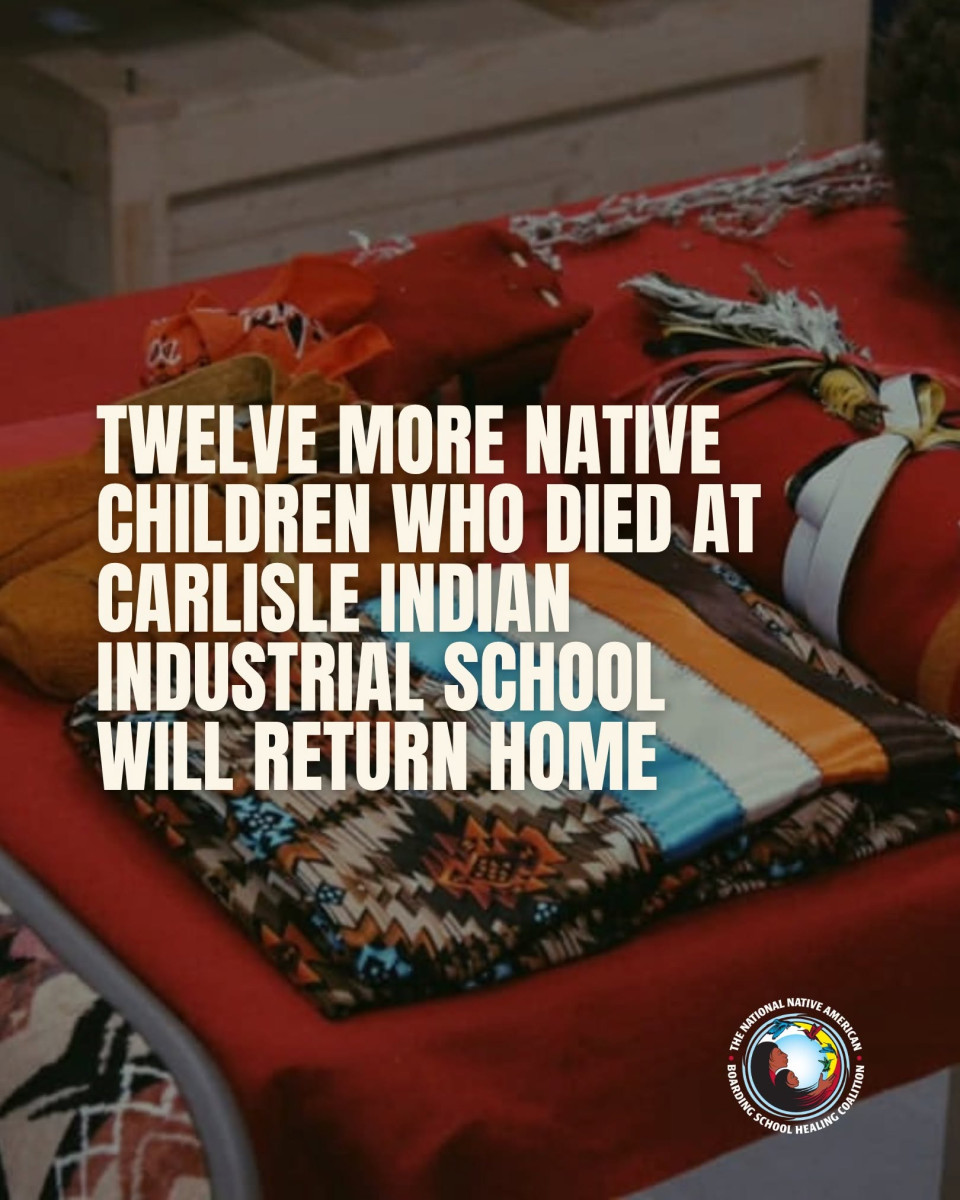
Jennifer Bereskin – This so healing for our ancestors 
 my relative Anna Vereskin is still there. Every child needs to be returned home
Dr Gerry Ebalaroza-Tunnell to Jennifer Bereskin Yes. Every child needs to be returned home!!!
Bruce Forsyth to Dr Gerry Ebalaroza-Tunnell, yes, every child does indeed need to be returned home, including the “215 bodies” buried at Kamloops. So, am I to understand that you think the Tkemlups te Secwepemc First Nation should undertake an excavation at the former Kamloops school? Unless there isn’t an “unmarked mass grave” in that apple orchard??? Your thoughts?
*************************************************************************************************************
Kat Arnett, a Canadian writer and cultural commentator based in British Columbia, posted the following photo:
Bruce Forsyth – Beaulieu admitted she misspoke; admitting she found anomalies, not actual bodies. Big difference. GPR doesn’t give you an image similar to an X-ray. This is why many of us are asking for an excavation of the site to find out what is actually buried in the ground, whether it’s bodies, or not. No reconciliation without truth.
Michael Wilson – Bruce Forsyth Regardless of whether a single bone is ever produced or not, are you actually going to ignore the fact that thousands of children were ripped from their families and subjected to years of terror and degradation? I wonder how you would feel if the government walked into your home and removed your own children? You want truth? You can’t handle the truth.
Bruce Forsyth – Michael Wilson, like most people, you are conflating two separate issues. I’m talking about the claim of 215 bodies. Learn to read before you speak up.
Bruce Forsyth – Michael Wilson, oops, it looks like you are the one who can’t handle the truth.
***********
Tom Von Dungern to Bruce Forsyth problem is… what if there is no bodies??? Natives will loose there money train… 12 plus million to dig and no shovel in the ground… chief got a new truck though… if they knew there was bodies they wouid dig and prove it and ask for even more money… they arent sure for the scan said something was there… could be anything…so for now the Natives are just killing time waiting for more free money…
Jason King to Bruce Forsyth Reconciliation is about more than bodies you closed minded clod. Wake up.
Bruce Forsyth to Jason King, hey Jason, where did I say that it wasn’t? The topic that I am discussing right now is about the “discovery” of 215 “bodies,” but you are right that it’s not the only issue. For example, the more than $12 million given to the Tk’emlúps te Secwépemc First Nation to investigate and handle potential unmarked graves at the former Kamloops Indian Residential School, something that has not taken place, so there’s that too. As I said, we need the truth. Try to stick to the topic and try making an intelligent counter-argument without the insults.

Some of the positive stories of life at the Indian Residential Schools from the Truth and Reconciliation report – IR4-5-2015-eng.pdf
“Ellen Smith’s father attended the Anglican residential school at Hay River in the Northwest Territories. She believes that his experiences at the school led him to oppose her being sent to residential school. However, her grandfather believed it was necessary that she get an education.”
“My dad reluctantly let me go to school because my grandpa said that “in the future she will help our people; she needs to go there.” And that struggle occurred with my dad over the years. For eleven years, that I went to residential school. But my grandpa was the one that said, “They have to go. She has to go.”40 She was sent to the Anglican school in Aklavik in 1953. She eventually attended three other residential schools.”
“Some parents wanted their children to gain the knowledge they believed was needed to protect their community and culture. When Shirley Williams’s father took her to catch the bus to the Spanish, Ontario, girls’ school, he bought her an ice cream and gave her four instructions: “One was remember who you are. Do not forget your language. Whatever
they do to you in there, be strong. And the fourth one, learn about the Indian Act, and come back and teach me. So with those four things, he said that ‘you don’t know why I’m telling you this, but some day you will understand.’”41″
“Some children wanted to go to school, at least initially. Leon Wyallon, who attended the Roman Catholic residence in Fort Smith in the 1960s, said he looked forward to residential school “because I wanted to learn; learn to talk English and learn, so I can learn both languages at the same time.” He hated his first year at the residence, particularly the restrictions on speaking his own language. But he said, “My mom and dad didn’t listen to me; but they still sent me back.”43”
“In other cases, missionaries convinced students of the benefits of going to school. Anthony Henry said that a priest named Father LaSalle convinced him to come to residential school at Kenora. According to Henry, his mother did not want him to go to residential school, but LaSalle, who spoke fluent Ojibway, convinced him it would be beneficial.44”
“Poverty and the inability to feed and clothe their children forced some parents to send their children to residential school. When Ivan George was enrolled in the Mission, British Columbia, school, his father was a single parent with six children under the age of fourteen. When the time came to return to the school after his first summer holiday, Ivan told his father he did not wish to return. “He says, ‘You have to. I can’t provide for you, or nothing to feed you, clothes on your back, education.’ So, I went back, and I said, ‘Oh, I better,’ because you know where, what, what’s going on, all that. So, I stayed the whole year without running away.”45”
“Cecilia Whitefield-Big George said her mother was not able to support her family when they lived in Big Grassy in northwestern Ontario. She would go and clean, work for people, eh, like do their laundry and clean their floors and clean the house for them and that’s how she fed us. They’d give her food, eh. And then when the priest arrived he told her,
you know they’d be in a good place if they went to school. And so that’s how that happened. I, my little sister, she was only four years old. So that’s how we first got picked up.46″
“One former student, whose grandparents had also attended residential school, placed his daughter in residential school when she was thirteen. I didn’t have a wife at the time and I felt that was a good place for her, so I wasn’t really fully aware of the, you know, the negative parts of, the parts, negative, negativity of residential school ’cause really, I guess, when I look at the residential school issue, you know, I saw, you know, physically, I guess, better than what I experienced at the reserve. On the reserve I had a very abusive dad, my dad was abusive, physically abusive, and we lived in a little log cabin and we didn’t have regular meals.47”
“Ethel Johnson said she and her siblings were sent to the Shubenacadie school when her mother was diagnosed with tuberculosis. My father couldn’t look after us. I was ten years old, there was another one, there wasfive of us, and the youngest was about nine months old, at the time. So the three of 20 • Truth & Reconciliation Commission us were old enough to go to residential school; I never even heard about it ’til then. ’Cause my father had to work and he had to maintain a house, fix our meals, he just couldn’t do it. So I don’t know where he found out or how this was possible, but we
ended up going over there anyway. This was in ’46.4″
“In some cases, parents placed their children in the school to protect them from violence in the community. Both of Dorene Bernard’s parents had attended the Shubenacadie school. My father spent eleven years in a residential school, from 1929 to 1940. My mom spent around seven years there during the 1940s. Whatever would have made them think that it had changed, that it was better in 1960s than it was when they were there? I don’t know. But I could tell you that our lives outside the residential school was bad enough that she felt she was alone to make those decisions, that it was better
for us to be there than with other family members, with our extended family. We were safer in her eyes to be there than at home.53″
Sports and recreation
“This gym was a saviour.”
“The opportunity to participate in organized sports was limited in residential schools. Many schools didn’t have a gymnasium, a skating rink, or a playing field. Equipment was often in short supply or poor repair, or was improperly sized. But, where it existed, many students seized the limited athletic and recreational opportunities presented to them.
Many students claimed that sports helped them make it through residential school. Christina Kimball attended the Roman Catholic school near The Pas, where she experienced physical, sexual, and emotional abuse. She believes that it was only through her involvement with sports that she survived. “I was very sports-oriented. I played baseball. Well, we play baseball, and even hockey. We had a hockey team. That was benefited, benefited me in a way ’cause I loved playing sports. Well, that’s one way, too. I don’t know how I did it but I was pretty good in sports.”695″
“Noel Starblanket said that at the Qu’Appelle school, I had some good moments, in particular in the sports side, ’cause I really enjoyed sports. I was quite athletic, and basically that’s what kept me alive, that’s what kept me going was the sports. When I was forced to go back after holidays, or things like that, the only thing that I wanted to go back for was for the sports, nothing else. I didn’t want to go back for the teaching, for the teachers, for the, the Christian indoctrination, or, or the strapping, or any of the other abuses. I wanted to go back for the sports. That was the only thing I went back for.696
At the Lestock school, Geraldine Shingoose took refuge in extracurricular activities. One of the good things that I would do to try and get out of just the abuse was try to, I would join track-meet, try and be, and I was quite athletic in boarding school. And I also joined the band, and I played a trombone. And, and that was something that took me away from the school, and just to, it was a relief.697″
“Paul Andrew spent seven years at Grollier Hall in Inuvik. One of his strongest and most positive memories related to school sports. At a Truth and Reconciliation Commission of Canada public dialogue in the school gymnasium in the Inuvik school, he recalled that he ran around this gym a lot of times, and this gym was a saviour for a lot of things because we were good at the physical stuff, we were good athletes, we were good at the sports. I don’t know about people, I didn’t do very good in classrooms because I didn’t have the basics, the background in education. And there was times when I was called dumb and stupid and there were times when I felt dumb and stupid. But put me in a gym, there was not too many people better than I am. There were some, but not too many better than I. And so I loved it in the gyms. I loved it all in the cross-country trails, I loved it on the hockey, hockey arenas because they made me feel like I’m part of, they made me feel good. But in the education it wasn’t quite the same.698”
“John Kistabish was another of the students who took refuge in sports. “I really liked to play hockey. I liked a lot because we helped each other, you weren’t alone, because I wanted to win. And, we had fun because we helped each other a lot.699 In some cases, the coaches took the pleasure out of sports. Pierre Papatie played goalie for the Amos school team. He said that “When we were losing, we were getting beaten with a ruler. We always had to win. We didn’t know how to lose. It was always, win, win.”700”
“Aaron Leon spent seven years at the Mission school, where he was sexually and physically abused. School sports were among the few positive elements of school life that he could recall.And the positive stuff I got out of it was I learned how to play in a band, I learned gymnastics, soccer, baseball, you know, physical part of me. Another positive, I guess, would be being amongst a big group of different people I didn’t know, and it felt good to be amongst my own people not knowing who they are.701”
Participation in athletics gave students a sense of accomplishment.
“Orval Commanda recalled that sports played a positive role in his life at the Spanish, Ontario, boys’ school, and that the opportunity to play sports was used as an incentive to get the students to do their school work. So anyway in, when I came here, in ’52, there was a lot of sports going on, and, and I was into sports, you know. I played hockey, and basketball, and at the time they played softball, like, and also played pool, because I started playing pool when I was seven years old….And I liked playing sports. You know if you wanted to be on a hockey team, you had to have your work done, you know?705”
“William Antoine was one of the students who credited Jesuit Father Maurice for the extensive sports program at the Spanish school. The one thing I liked over there was the sports. Oh, there’s, there’s any sport you wanted to play. You know, there’s basketball in the fall of the year, you know. And then hockey, you know, in the winter time. And, summer time there was softball, baseball, lacrosse. Lacrosse was my, my favourite sport; I really loved that sport and I was good at it too. A little ball you threw around to get in the net, yeah. I really liked that sport. And I was good at running; you know I was fast, I was skinny. You know I was pretty agile, that’s why I loved that sport. Under Father Maurice, there were also sports banquets to honour student and team accomplishments, and annual field days. You know, running, jumping, pole vaulting, high jumping, and shot put. All those games, you know we played those games and that was a real fun time, fun day you know. It was for one day and it was all day; and, and whoever won, well they got, they got, a medal of some kind and it showed that you, you know, you were, you were good at what you did, you know. So that was so, very rewarding.706”
“Joseph Maud learned to skate at the Pine Creek school. And I remember, I remember some of the activities that we would, we’d, we would do, like, there was a skating rink outside, and my brother Marcel taught me how to skate. And once a week on Saturday evenings, we would have a skating party, where the girls would join the boys, and we would skate maybe from, like, from 6:00 o’clock ’til 10:00 o’clock every Saturday. So that was, that was probably one of the happier times at the residential school.707”
Playwright, author and musician Thompson Highway stated of his time at Guy Hill Indian Residential School, “Nine of the happiest years of my life I spent at that school.” Highway crediting the school with teaching him English and to play piano.
Additional information from the Truth and Reconciliation Report:
“The Fort Vermilion Band from Alberta said that its members favoured the existing system of church-administered education and Chief Shot On Both Sides presented a petition to the Blood Band Council, calling for the establishment of a Roman Catholic high school on the reserve.”
“The Fort Smith Band in the Northwest Territories spoke highly of the accomplishments of the Roman Catholic day school and the Roman Catholic residential schools in Fort Chipewyan and Fort Resolution. The brief, signed by Chief Abraham Deneyutchele, André Deneyutchele, Baptiste Arcand, Baptiste Niyalti, Josep Keskore, Adam Calumet, and Germain Tourangeau, stated that it was the sincere hope of the band that the Government will leave the direction of these schools in the hands of those who are now in charge of them, and who have proven over the long period of years reaching from the foundation of these establishments, their worth as educators capable of bringing honor both to the settlement in which they live, as well as to the teaching of our children to which they have devoted their lives.”
“The Veterans’ Association of Wikwemikong on Manitoulin Island in Ontario expressed a strong attachment to the Roman Catholic faith in their brief. They were opposed “to the public school system of education being foisted upon us. We want to keep our Catholic denominational schools and we wish to keep religion in our schools as we have always had it from the beginning.” The association held the two residential schools at Spanish, Ontario, in high regard, adding that a “high school and training school should be established there.”
“Chief Teddy Yellowfly of the Blackfoot Reserve in Alberta recommended that a non-denominational residential school be established in each province for the children of parents who were neither Catholic nor Protestant.”
“At its meeting in Saddle Lake, Alberta, in 1931, the League of Indians of Canada called for the construction of more day schools to augment residential schools. This school was under Roman Catholic administration until 1970 when it became the first Native-administrated school in Canada.”
“In 1962, Stoney Nation Chief George Labelle hired a lawyer to petition the United Church to ask Ottawa to reverse the planned closure of nearby Morley Residential School. ‘It will be a great tragedy if this famous United Church mission school is closed.’”
“In British Columbia, the Kamloops Indian Band requested that a school be “established among them” in 1885. A residential school opened five years later under the auspices of Chief Louis Clexlixqen who consistently supported education: he had encouraged Shuswap children to attend the residential school at the Okanagan mission in the late 1860s, assisted the Oblates in establishing a day-school on the Kamloops Reserve in 1880, and initiated the residential school built there in 1890.”
“The [Kamloops Band] are much elated at having the industrial school on their reserve, and were arrangements made for the accommodation and support of more scholars, the present number might easily be quadrupled.”
“Many students have positive memories of their experiences at residential schools and acknowledge the skills they acquired.”
“In the 1940s, the Indian band at Cold Lake called for the construction of a residential school in their community.”
***********
From a 1997 Dalhousie University thesis written by Ph. D Marilyn Elaine Thomson-Millward:
Children identified as suffering from “serious neglect” at home were prioritized for admission to residential schools because federal officials decided they required a safe refuge. “Both parents excessive drinkers,” states one typical report.
“The father is a veteran and has some difficulty controlling his appetite for liquor,” reads another. Her research identified “thousands” of examples of similar situations in federal files.
A census taken by Indian Affairs in 1953 found that 43% of the 10,112 Indigenous children in residential schools nationwide were listed as neglected or living in homes that were unfit because of parental problems.
A similar study eight years later in B.C. put the figure at 50% and observed that a similar percentage would likely apply to the rest of the country as well.
By 1975, children from “broken or immoral homes” constituted nearly the entire student population at three Saskatchewan residential schools: Gordon’s Residential School (83%), Muscowequan Residential School (64%) and Cowessess Residential School (80%).
The vast majority of Indigenous children attending residential schools during the post-war period were there for reasons other than an education. In particular, the devastating intergenerational effects of alcoholism on reserves had turned federal residential schools into a de factonative child welfare system. And had the government shut those schools down in the 1940s, as it very much wanted to, these children would have had no other place to go. Considering this, accusations of genocide are not just wrong, but outrageously so.
***********
By the way, does anyone know what our illustrious former Prime Minister, Justin “Surfin’ Safari” Castro (aka Trudeau), was doing on the holiday he created and infamously ditched the first annual commemoration ceremony to go surfing in Tofino?

