

October 2026
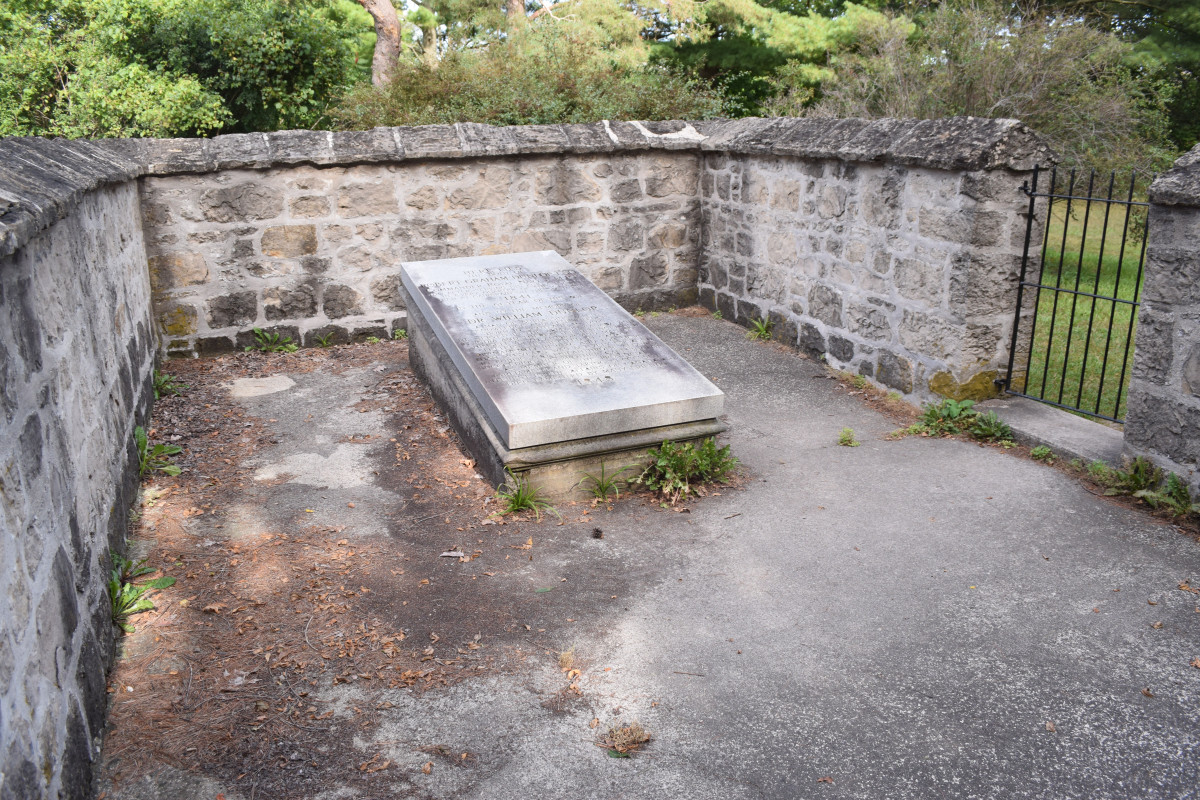
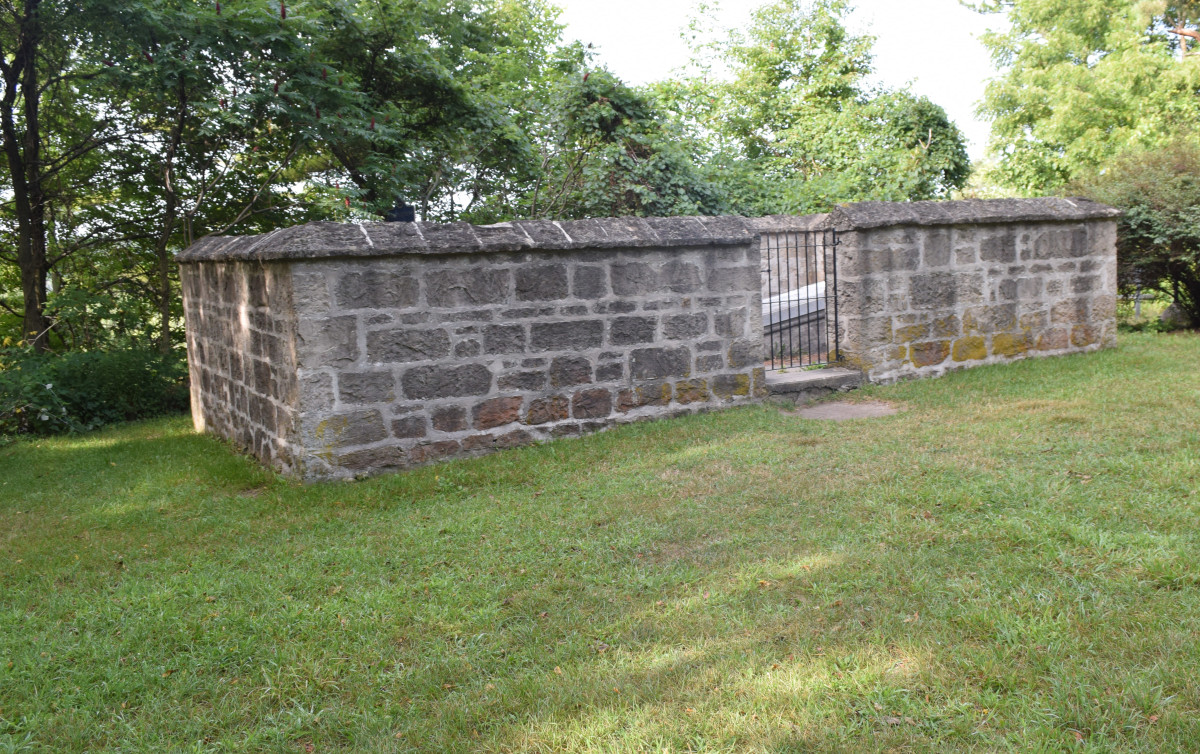
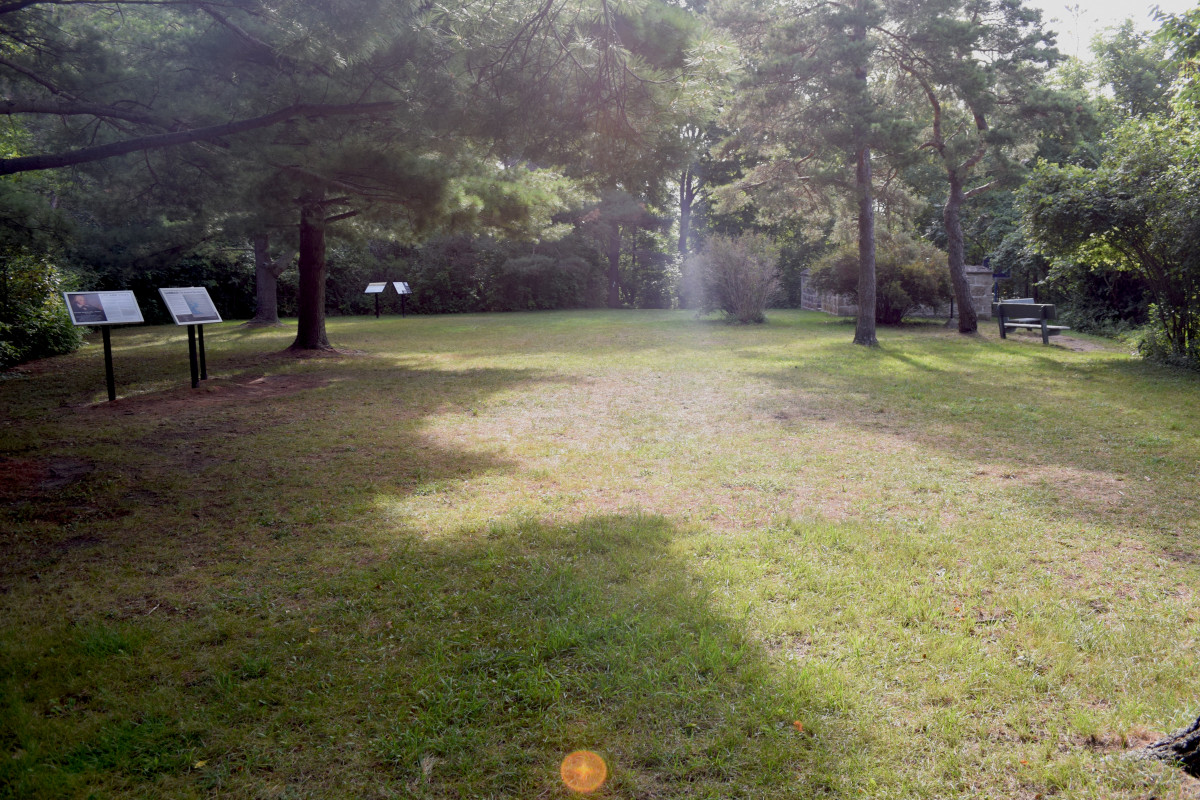
Up a short pathway leading up a hill alongside a rail trail, is a small park on a bluff overlooking the Maitland River just north of Goderich, containing benches, historical plaques and a small area enclosed by a stone wall that’s actually a private family cemetery. This is the final resting place for Dr. William “Tiger” Dunlop and several members of his family.
This is also the last remnants of Gairbraid, the 845-acre estate acquired from the Canada Company in 1833 by Dr. William “Tiger” Dunlop and his brother, Royal Navy Commander Robert Dunlop.
The southern Ontario town of Goderich, located on “Ontario’s West Coast,” owes its existence to the larger-than-life personality of “Tiger” Dunlop, the British adventurer is largely credited with the founding of Goderich and together with John Galt, laid out the plans for many of the first roads and towns across southwestern Ontario in the 1820s, overseeing the exploration of the Huron Tract.
Dunlop, who earned him the nickname “Tiger” due to his adventures in India, was born in 1792 in Greenock, Renfrewshire, Scotland. His first acquaintance with Canada was as an army surgeon arriving at Lachine, Quebec in 1813. A later sojourn in India for the six-foot-three man with fiery red hair and a large appetite for whisky and tall tales, involved some adventures with tigers, and produced his famous nickname.
Dunlop was also an author, publishing books and newspaper articles detailing his wartime experiences and his work in the development of Canada.
Along with John Galt, Dunlop also founded the Town of Guelph in Wellington County in April 1827, two months before the founding of Goderich.
Appointed General Superintendent of the Huron Tract in 1833, Dunlop would aslo serve as the Warden of the Forests for the Canada Company from 1826 until 1838, as well as serving as the Member of the Legislative Assembly for Canada West for Huron County from 1841-1845.
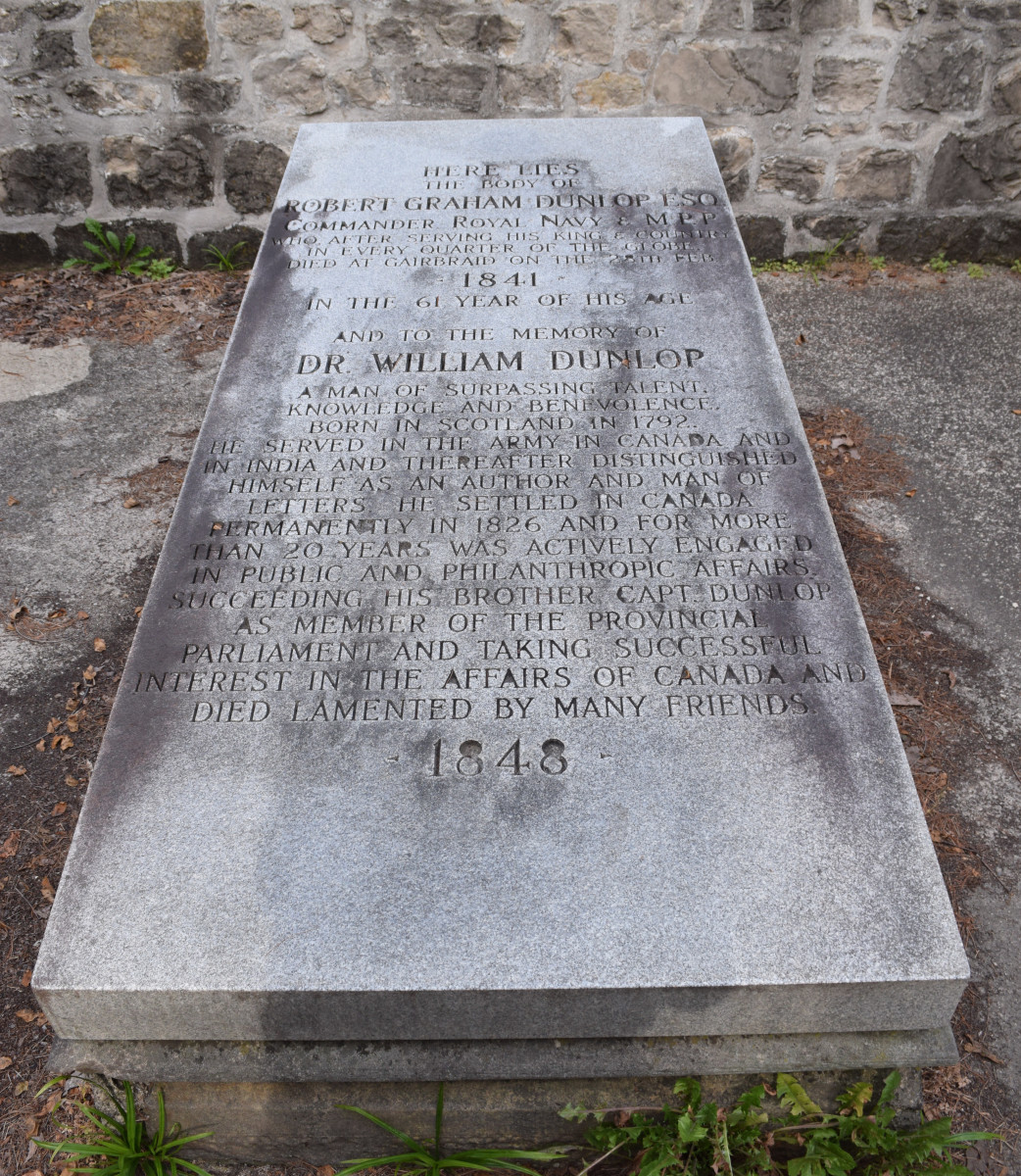
Dunlop’s final appointment was as superintendent of renovation work on the Lachine Canal. He died in Lacine on 29 June 1848, at the age of 56. His last adventure was the trip his coffin made home from Montreal to Goderich, ending with burial here, beside his brother Robert, who died in 1841.
The Montreal Gazette wrote in 1848 that, “Dunlop was a man of high spirit of loyalty and personal independence; of much learning as well as social brilliancy; and with a spirit of vigorous sarcasm, used so discreetly that do not believe he had an enemy in the world…the work he leaves behind him conveys a very inadequate idea of his talents. His remains will be removed, to be interred on some property he had acquired on the shores of Lake Huron.”
Ironically enough, Goderich wasn’t the town that Dunlop had in mind, but a town situated just north of where Goderich was founded. Named “Gairbraid,” after a town near Glasgow in their native Scotland, the plan was to subdivide and sell lots on the 845 acre tract of land owned by Dunlop and his brother Robert, using a central octagon with radiating streets in a design similar to Goderich.
The dream for Gairbraid never came to fruition and ended with Dunlop’s death. According to his wishes, Dunlop was buried on his Gairbraid property.
Goderich, on the other hand, flourished and today is a picturesque town of almost 8, 000 residents, featuring numerous historic limestone buildings, the oldest salt mining industry in Ontario and a moniker of “the prettiest town in Canada.”
Goderich is also the site of the former Huron County Gaol, opened in 1842, infamously known as the jail that once held Steven Truscott. The then-14-year-old was the youngest inmate sentenced to death in Canada in 1959 for the murder of his 12-year-old classmate, Lynne Harper, at the now-closed RCAF Station Clinton, a controversial conviction that was overturned on appeal almost 50 years later and an acquittal issued.
The Huron County Gaol closed in 1972 after 130 years of operation, and has been operating as a museum since 1974. It was designated a National Historic Site of Canada the following year.
*************************************************************************************************************
Although “Tiger” and Robert are the only names listed on the lone grave marker, the family tomb is also the final resting place of:
Unknown male friend of the family, name now lost – 1834
Robert Graham Dunlop 28 February 1841, age 50
Annabella McColl Clouting, sister of Louisa McColl Dunlop, wife of James Clouting, died circa 1843
Commander William “Tiger” Dunlop, RN, MPP, 29 June 1848, age 55
John McColl, 1 September 1848, age 12
Hugh McColl, father of John, brother of Louisa, 12 September 1848, age 48
Alexander McColl, infant son of Hugh, 10 December 1848
Ann McColl Carmichael, sister of Louisa and mother of Mary Carmichael, circa 1857
Louisa McColl Dunlop, 15 March 1871
Catherine McColl Winter, eldest sister of Louisa, 30 November 1887, age 99
John McCaul (Unknown if he is buried in the tomb)
The views all along the way are spectacular.
Sources: Dunlop’s Tomb, Gairbraid – Huron County Museum, Historical figures who made Goderich: Doctor William ‘Tiger’ Dunlop, ‘The Backwoodsman, Goderich, ON, Canada – Lonely Tomb in Never Built Town.

