October 2026
Mention the name Billy Bishop to most Canadians, and their minds will go back to the days of the Gentlemen Flyers of the Great War. The celebrated Canadian airman was the top Canadian and British Empire ace of the Great War and the most decorated Canadian serviceman of the war, one of 64 Canadians who won the Victoria Cross during World War I, the highest and most prestigious award for gallantry in the face of the enemy that can be awarded to members of British and Commonwealth militaries in times of war.
Air Marshall William “Billy” Bishop, Jr., VC, CB, DSO & Bar, MC, DFC, ED, was born in Owen Sound, Ontario on 8 February 1894 to William Avery Bishop Sr., a lawyer, Registrar for Grey County and graduate of Osgoode Hall Law School, and Margaret Louisa (Green) Bishop.
Bishop was accepted to Royal Military College in Kingston, Ontario, in 1911, where he struggling academically during his first year. He was caught cheating on a year-end exam, and narrowly avoided expulsion. As he was beginning his senior year at RMC, Bishop and 15 of his classmates withdrew from the school to serve as officers in the early days of the Great War. Commissioned on 30 September 1914, he was posted to the Mississauga Horse, a cavalry regiment. In England, Bishop was assigned to the 7th Canadian Mounted Rifles, who were training at Shorncliffe Cavalry Camp.
After spending some time living in the rainy swamp of mud and horse manure that Shorncliffe became in poor weather, Bishop requested a transfer to the newly-formed Royal Air Force and on 1 September 1915, he was assigned to 21 (Training) Squadron at Netheravon, Wiltshire for elementary air instruction. The first aircraft Bishop trained in was the Avro 504 aeroplane, initially as an air observer.
As a fighter pilot, Bishop was known for flying many unofficial “lone-wolf” missions deep into enemy territory, with the blessing of his Commanding Officer Major Allan Scott. One such solo mission in June 1917 saw Bishop attacking an enemy aerodrome where he claimed to have shot down three aircraft that were taking off to attack him and destroyed several more on the ground, an action for which he was awarded the Victoria Cross. Over the years, there have been suggestions that his actions on this mission may have been embellished, something that was common for propaganda and moral purposes.
Bishop’s unrestrained style of flying always had him in a prominent role, leading his pilots into battle over hostile territory. Bishop was also one of the many fighter pilots who battled the infamous “Red Baron,” Baron Manfred von Richthofen, barely surviving one encounter with the famed German flying ace.
Despite being enemies, Bishop and other allied pilots had a very strong admiration for their German opponents, mentioning in letters to his fiancée, later wife Margaret, that the German fliers were chivalrous. He noted that the two sides exchanged dropped messages on the occasional casualty. On one occasion, Bishop wrote: “It is awfully nice to be on such good terms with one’s enemies, and everyone here speaks very highly of all the German flyers. They seem to all be of a fine crowd.”
By the end of the war, Bishop had claimed some 72 air victories, however, two official historians have argued that the real number was possibly as low as 27.
After the war, Bishop returned to civilian life, establishing an importing firm, Interallied Aircraft Corporation, and a short-lived passenger air service with fellow Canadian Royal Flying Corps ace and Victoria Cross winner, Lieutenant-Colonel William “Billy” Barker.
Bishop moved his family to Britain in 1921, where he was involved in various flying businesses. He was forced to move back to Canada after seeing his family wealth in 1929, becoming vice-president of McColl-Frontenac Oil Company.
In January 1936, Bishop returned to the military when he was appointed the first Canadian Air Vice-Marshall in the Royal Canadian Air Force. The outbreak of World War II saw Bishop promoted to Air Marshall and appointed Director of Recruiting for the Royal Canadian Air Force.
Bishop was instrumental in creating promoting the British Commonwealth Air Training Plan (BCATP), a training program for pilots, navigators, air gunners, air bombers and flight engineers for the Royal Canadian Air Force, the Royal Air Force, and other Commonwealth air forces. Although the original intent of this plan was to keep as many Canadian servicemen close to home as possible to avoid the great loss of life experienced in World War I, what became of this plan was nothing short of remarkable. More than 130,000 personnel from Great Britain, Canada, Australia and New Zealand graduate from 107 training schools across Canada – a remarkable feat by any standards; one that President Franklin Delano Roosevelt called the “Aerodrome of Democracy.”
The recruiting effort headed by Bishop was so successful that many applicants had to be turned away. Even Hollywood came calling and Bishop was featured as himself in the 1942 film, Captains of the Clouds, a film starring James Cagney and Allan Hale Sr. as bush pilots who join the RCAF and train under the BCATP. Various scenes in the film were shot at active BCATP stations at Uplands (Ottawa), Trenton (Ontario), Dartmouth (Nova Scotia), Jarvis (Ontario) and Mountain View (Ontario), with actual RCAF trainees playing extras in some scenes. The scene with Bishop was filmed at an actual “Wings Parade” at Uplands, where graduate pilot trainees finally receive their wings.
As the war went into its fifth year, Bishop’s health was in serious decline and he left the RCAF to return to the private sector, finally retiring completely in 1952. He volunteered his recruiting services once again at the outbreak of the Korean War, but the RCAF gracious declined due to his poor health. Bishop’s son later commented that he looked 70 years old on his 50th birthday in 1944.
Bishop remained active in the aviation world, with his efforts leading to the formation of the International Civil Aviation Organization in Montreal. He also authored books on aviation.
Air Marshall William Bishop died on 11 September 1956, at the age of 62 in Palm Beach, Florida. His funeral was held in Toronto, with full RCAF honours, with internment of his ashes in the Bishop family plot in Greenwood Cemetery in Owen Sound.
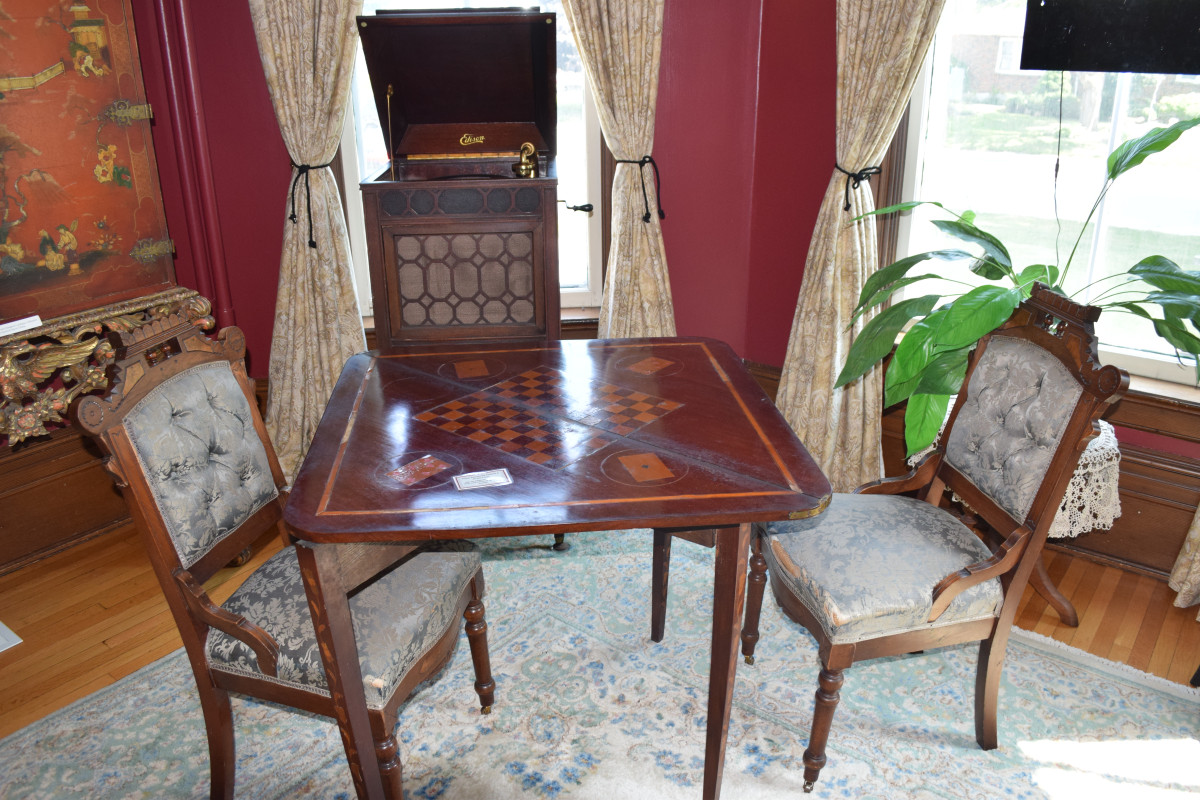
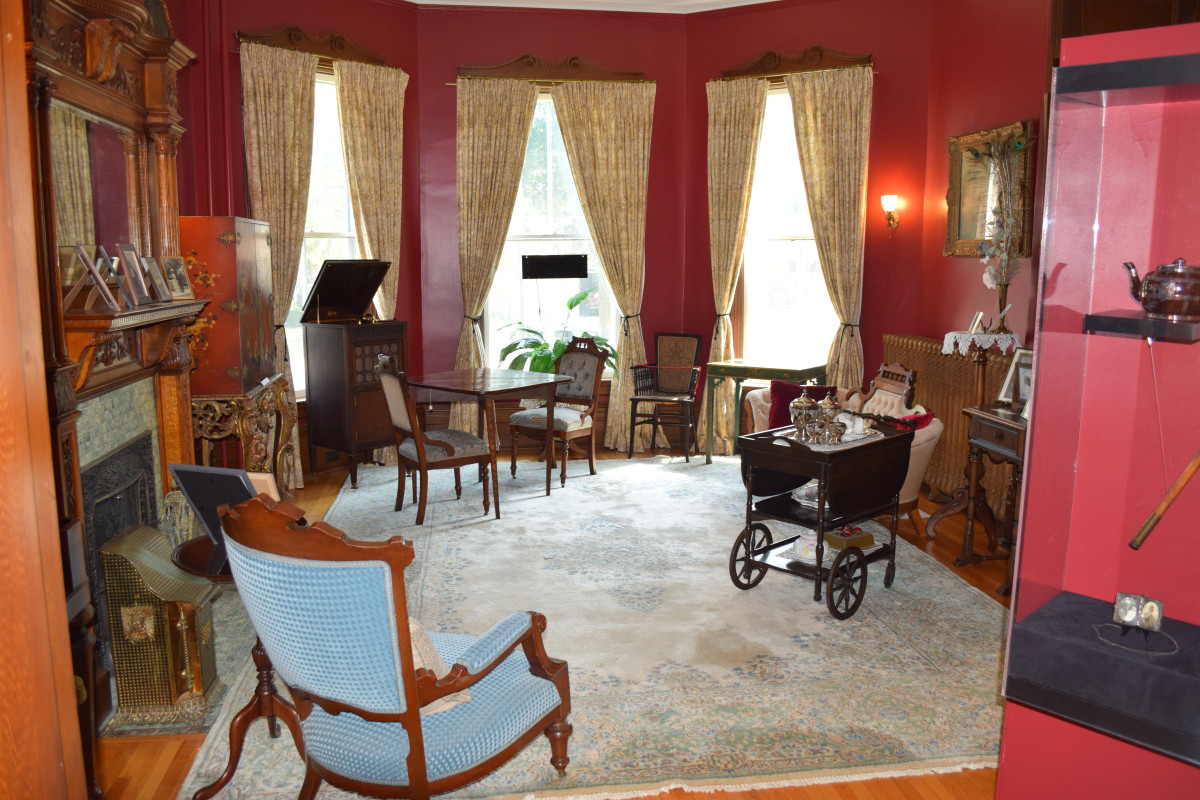
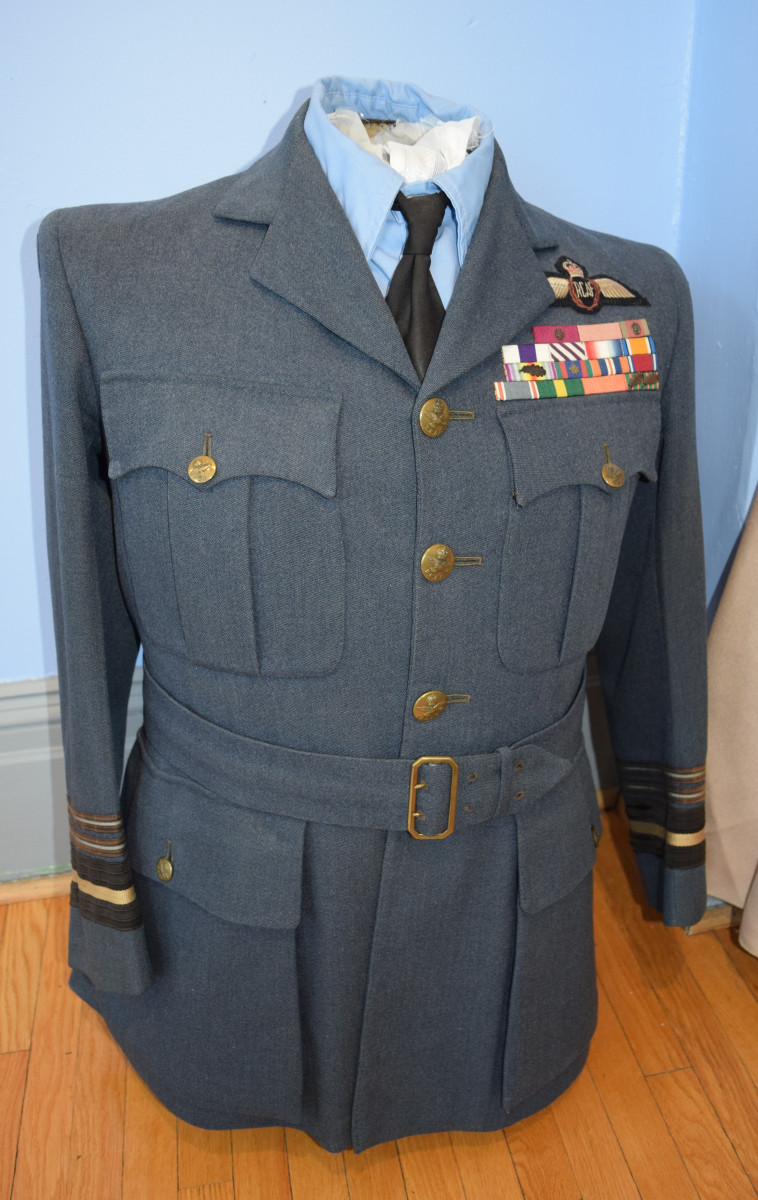
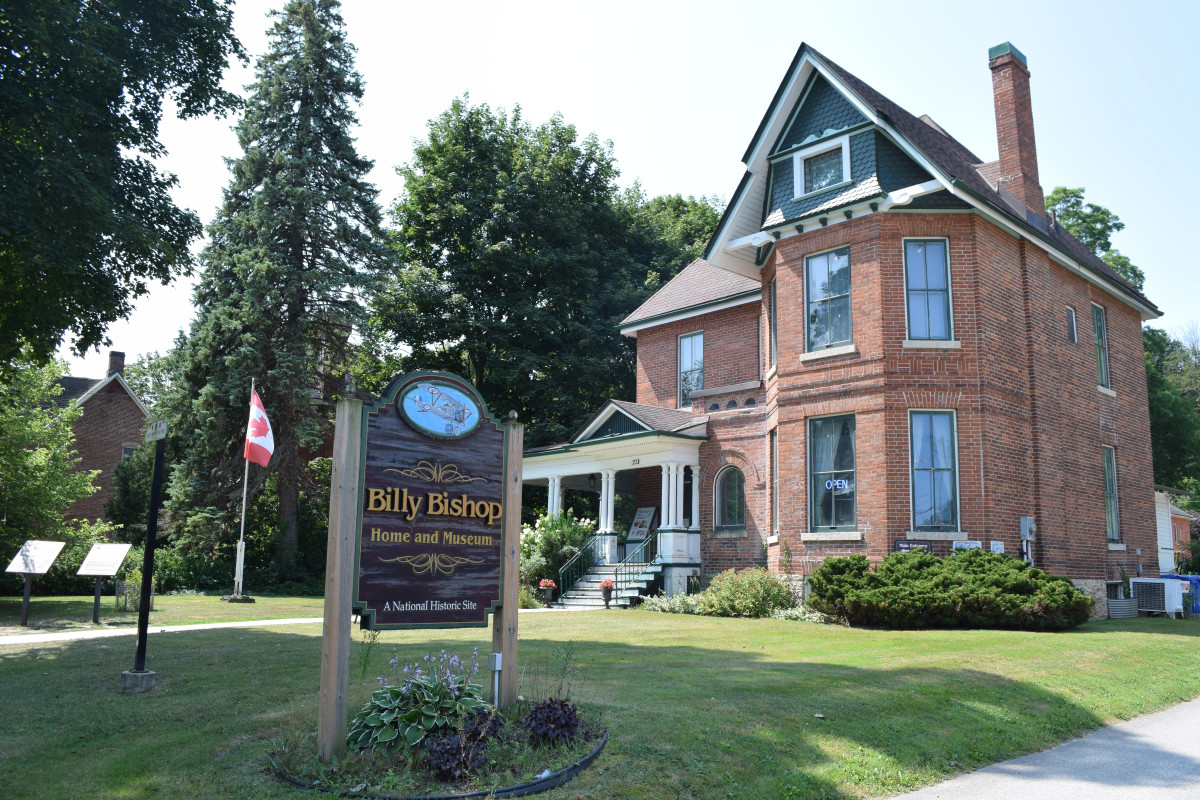
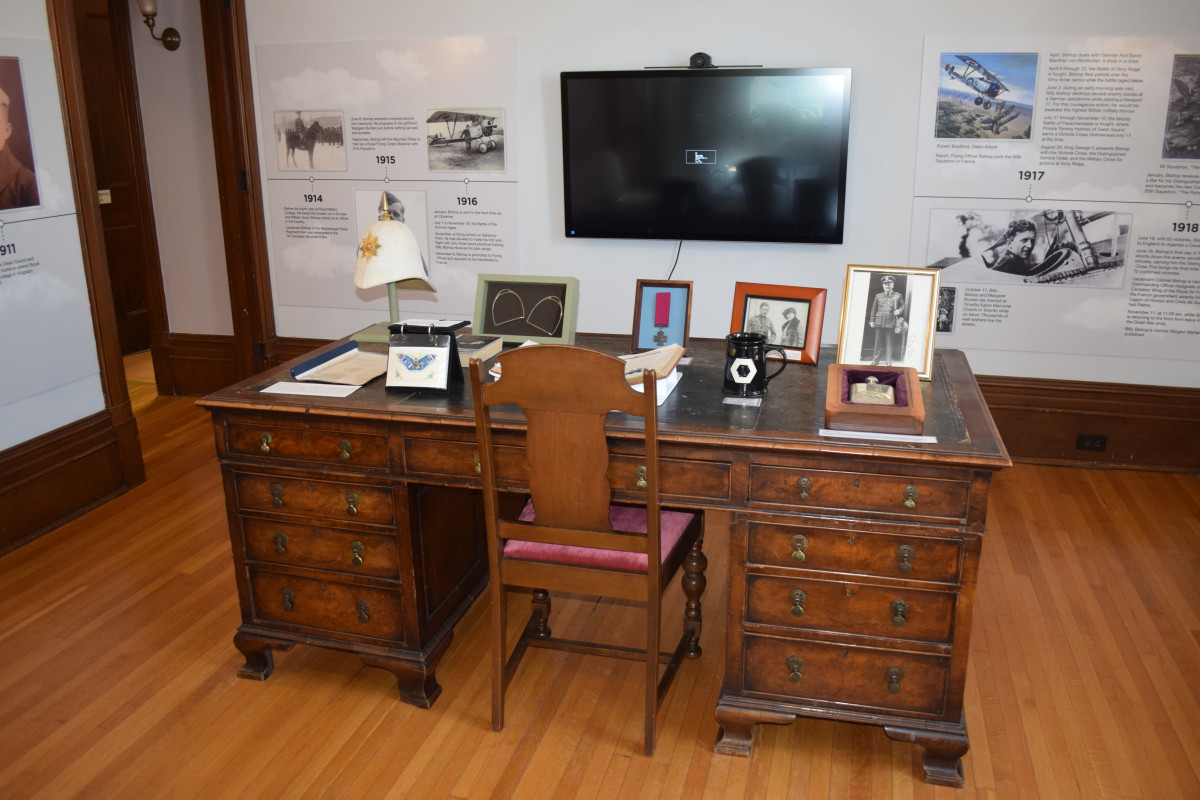
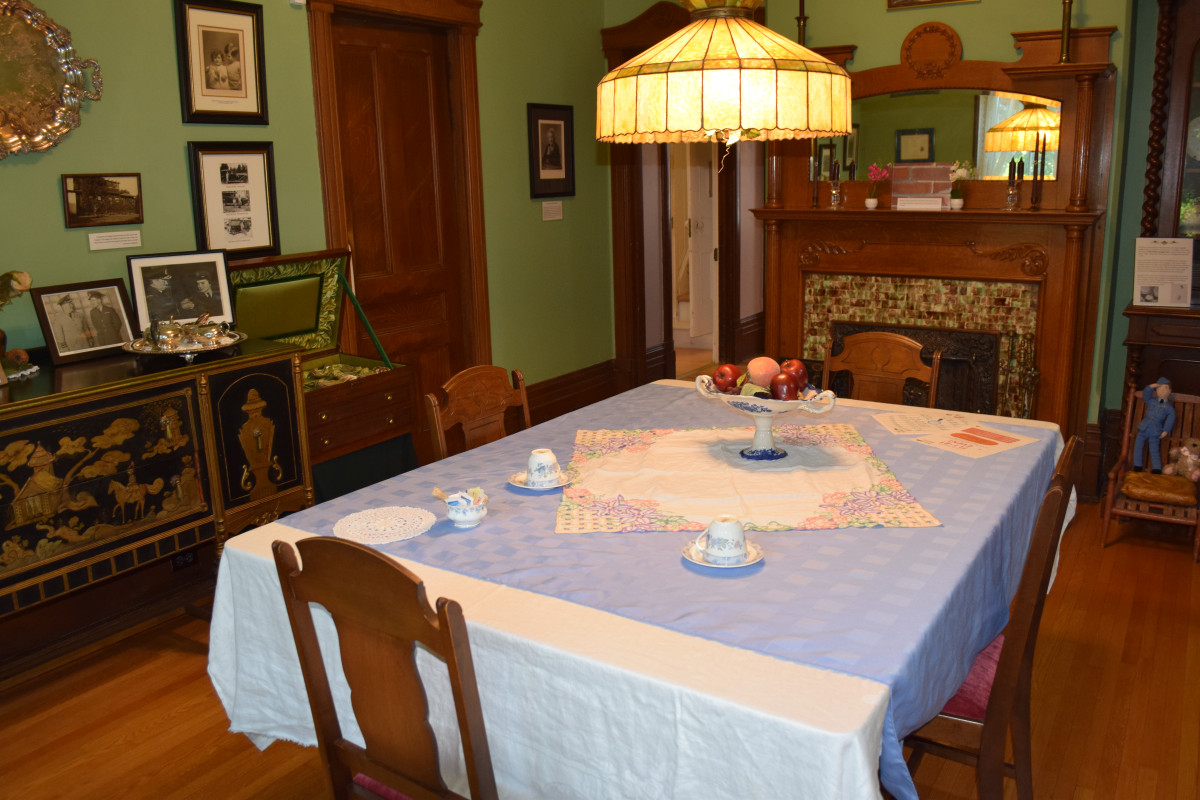
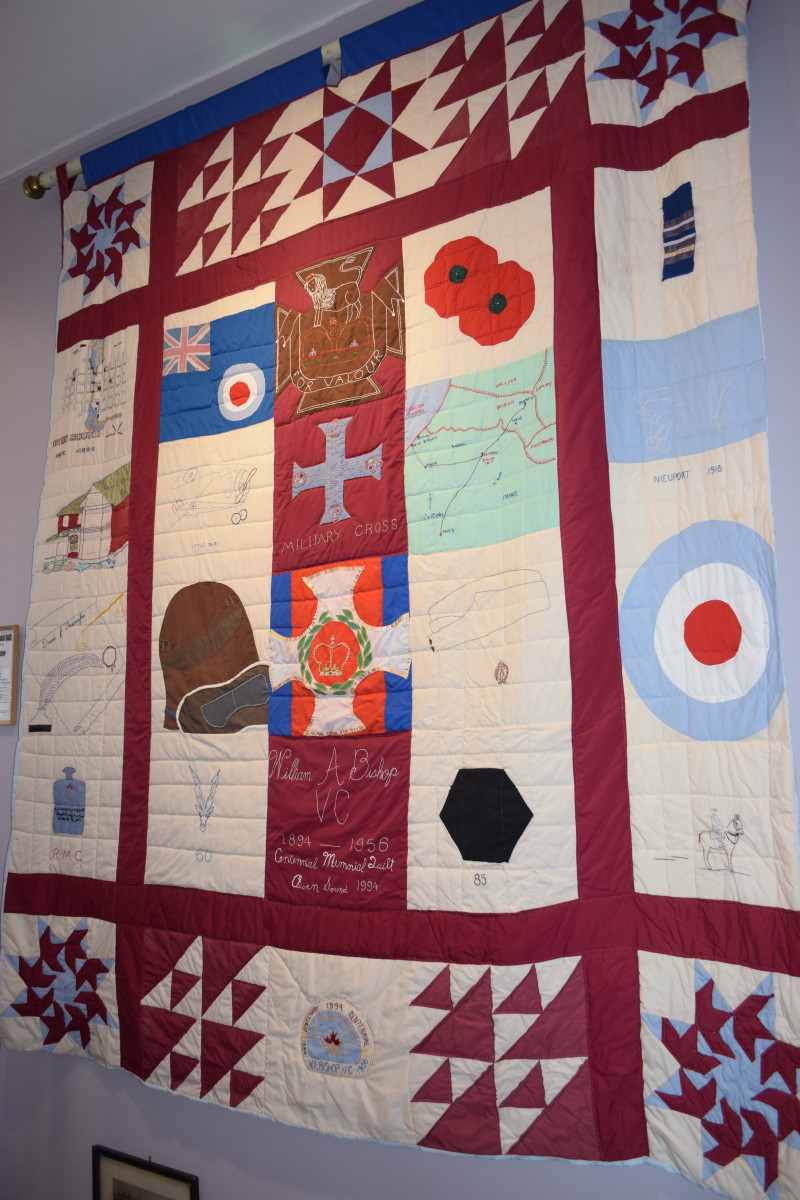
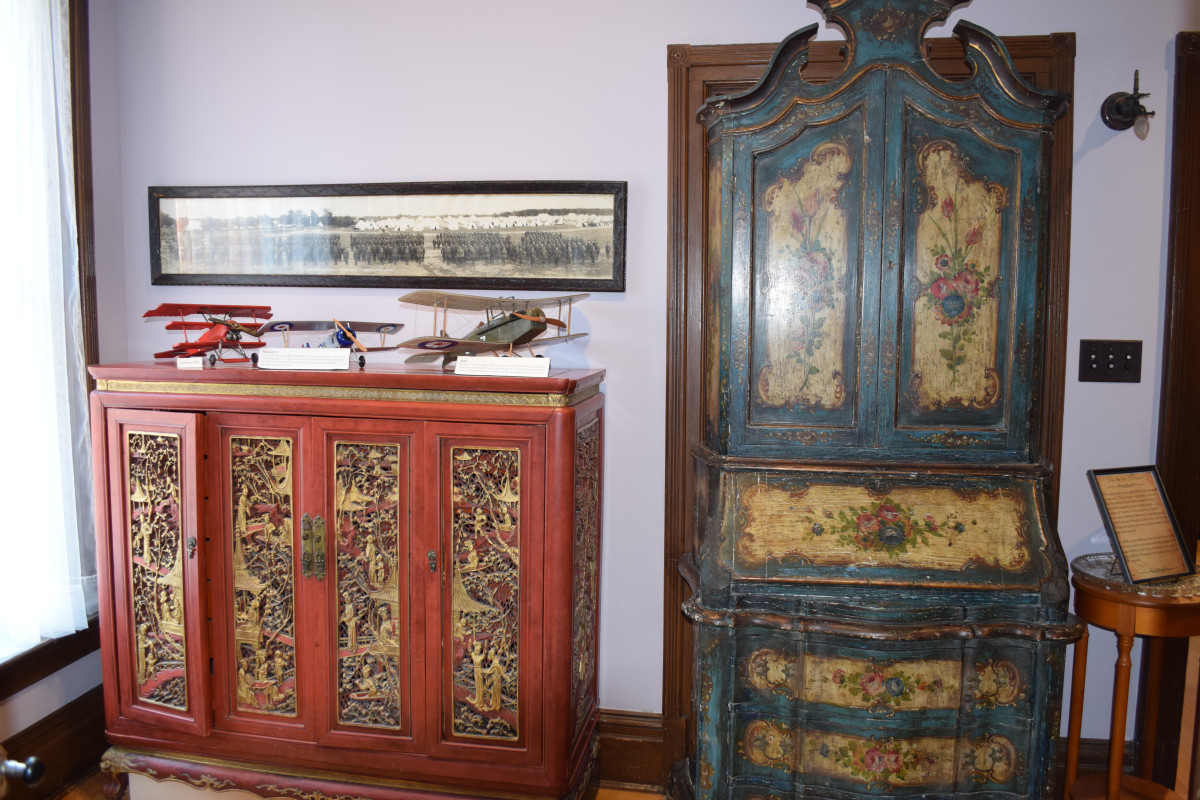
The Billy Bishop Museum was established in 1987 in Bishop’s childhood home on 3nd Avenue West in Owen Sound. The Victorian-era house features original hardwood floors, Victorian furnishings and personal possessions from the Bishop family, including uniforms, medals, photos, models and other artifacts from Canadians who fought during both World Wars.
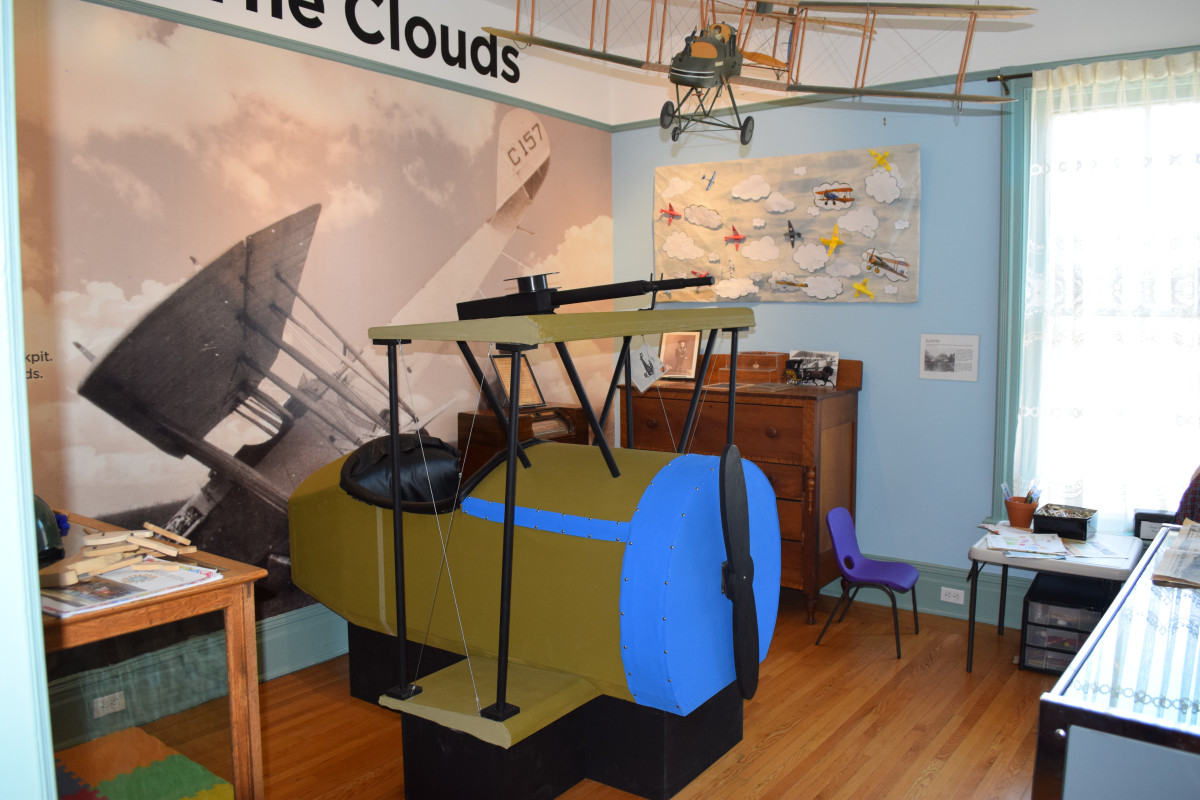
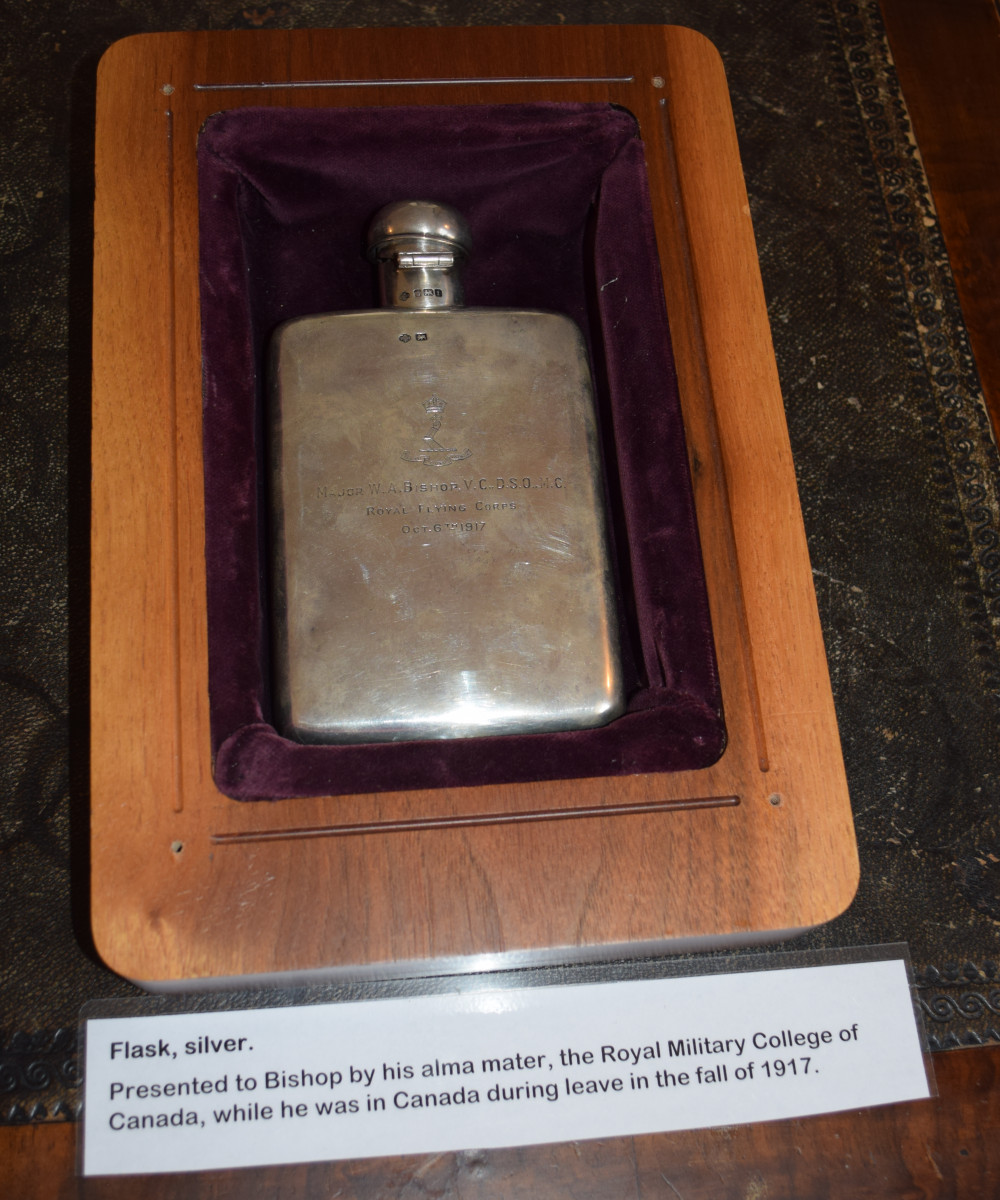

The museum is open year-round Tuesday to Saturday 11 AM to 4 PM.

Bishop’s decorations include the Victoria Cross, Distinguished Service Order & Bar, Military Cross, Distinguished Flying Cross, légion d’honneur and the Croix de Guerre with palm. He was made a Companion of the Order of the Bath in the King’s Birthday Honours List of 1 June 1944.
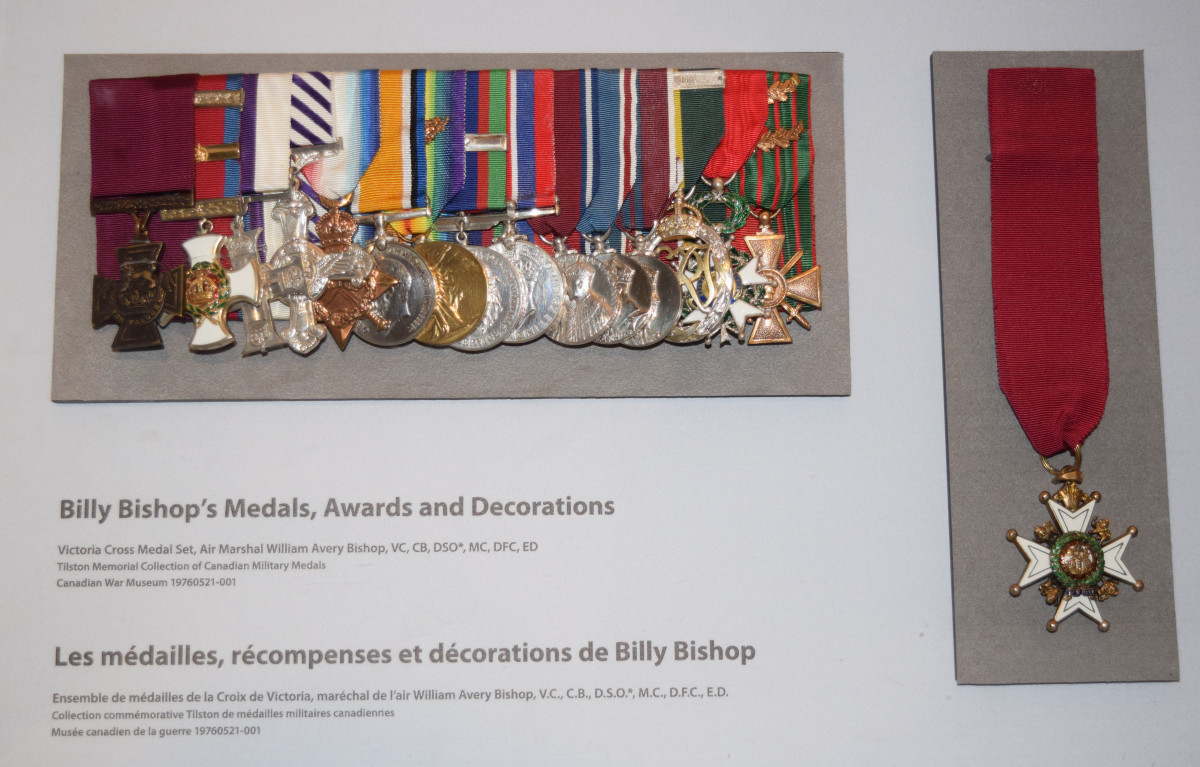
Victoria Cross
The citation for his VC, published in The London Gazette on 11 August 1917, read:
For most conspicuous bravery, determination, and skill. Captain Bishop, who had been sent out to work independently, flew first of all to an enemy aerodrome; finding no machines about, he flew on to another aerodrome about three miles southeast, which was at least 12 miles the other side of the line. Seven machines, some with their engines running, were on the ground. He attacked these from about fifty feet, and a mechanic, who was starting one of the engines, was seen to fall. One of the machines got off the ground, but at a height of 60 feet, Captain Bishop fired 15 rounds into it at very close range, and it crashed to the ground. A second machine got off the ground, into which he fired 30 rounds at 150 yards range, and it fell into a tree. Two more machines then rose from the aerodrome. One of these he engaged at a height of 1,000 feet, emptying the rest of his drum of ammunition. This machine crashed 300 yards from the aerodrome, after which Captain Bishop emptied a whole drum into the fourth hostile machine, and then flew back to his station. Four hostile scouts were about 1,250 feet above him for about a mile of his return journey, but they would not attack. His machine was very badly shot about by machine gun fire from the ground.
Distinguished Flying Cross
His citation for the Distinguished Flying Cross read:
A most successful and fearless fighter in the air, whose acts of outstanding bravery have already been recognized by the awards of the Victoria Cross, Distinguished Service Order, Bar to the Distinguished Service Order, and Military Cross. For the award of the Distinguished Flying Cross now conferred upon him he has rendered signally valuable services in personally destroying twenty-five enemy machines in twelve days—five of which he destroyed on the last day of his service at the front. The total number of machines destroyed by this distinguished officer is seventy-two, and his value as a moral factor to the Royal Air Force cannot be overestimated.
Distinguished Service Order
His citation for the Distinguished Service Order read:
For conspicuous gallantry and devotion to duty. While in a single-seater he attacked three hostile machines, two of which he brought down, although in the meantime he was himself attacked by four other hostile machines. His courage and determination have set a fine example to others.
Distinguished Service Order Bar
His citation for the Distinguished Service Order bar read:
For conspicuous gallantry and devotion to duty when engaging hostile aircraft. His consistent dash and great fearlessness have set a magnificent example to the pilots of his squadron. He has destroyed no less than 45 hostile machines within the past 5 months, frequently attacking enemy formations single-handed, and on all occasions displaying a fighting spirit and determination to get to close quarter with his opponents which have earned the admiration of all in contact with him.