

July 2026
Before the motor vehicles and major highway systems, the railway was the fastest and most efficient way to transport people and goods across the country. In addition to the national railways, like Canadian National and Canadian Pacific, there were many smaller regional railways that criss-crossed the provinces and territories, connecting towns and villages with the big cities.
Many of those smaller railways have long-since vanished, some of them swallowed up by the bigger railway companies, while others went bankrupt, leaving behind old train stations, trestles and rail lines; some still in use; some converted to recreational trails; some forgotten and overgrown.
The narrow-gauge Toronto, Grey & Bruce Railway (TG&B) was one such smaller railway in southern Ontario. The original Keinburg Station opened on 17 July 1871 to serve part of their Bolton and Owen Sound line. It was a basic wooden frame station with a lean-to roof, providing only basic services to passengers, situated over a mile to the west of Kleinburg, where the railway intersected Nashville Road.
The TG&B extended their rail service to Orangeville by September 1871 and to Owen Sound in August 1873.
The Canadian Pacific Railway (CPR) acquired the TG&B Railway in 1883 through a 999-year lease. The line was converted it to a standard gauge rail and operated by their subsidiary, the Ontario & Quebec Railway (O&Q). By March 1884, Kleinburg was seeing six trains a day transporting goods to the CPR port facilities in Owen Sound.
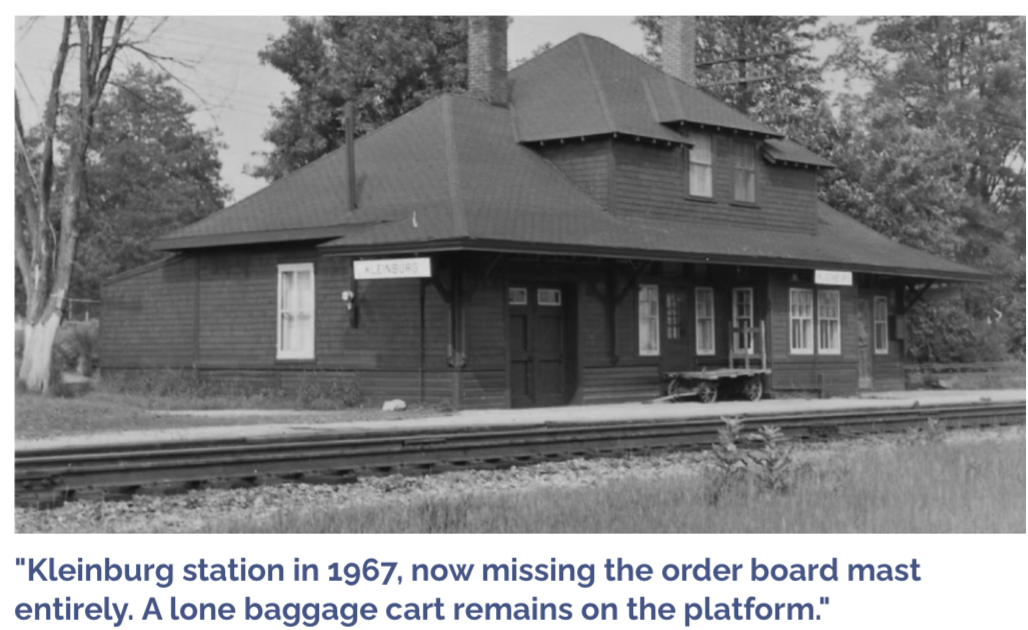
In 1905, the CPR began making improvements to the line, straightening and regrading portions to handle heavier and more frequent traffic. A new station was built around this time next to the old station, which was retained as a as a freight shed. At its height in 1921, service to Kleinburg had increased to a total of 13 passenger trains per day.
Like a lot of businesses, the railways across Canada were facing financial pressures during the Great Depression. The CPR cut service between Kleinburg and Owen Sound was terminated with the abandonment of the line Bolton and Orangeville section in 1932.
While passenger ridership rebounded during and immediately following World War II, ridership declined as the 1940s drew to a close, due to increased popularity of automobile ownership and air travel. The completion of Highway 400 in 1952 further cut into ridership numbers, leading to further service reductions to Kleinburg.
Exacerbating the ridership problems was the station’s inconvenient distance from Kleinburg, leasing to further service was reductions to eight trains per day by 1961. The end came in 1964, when the Kleinburg station was closed.
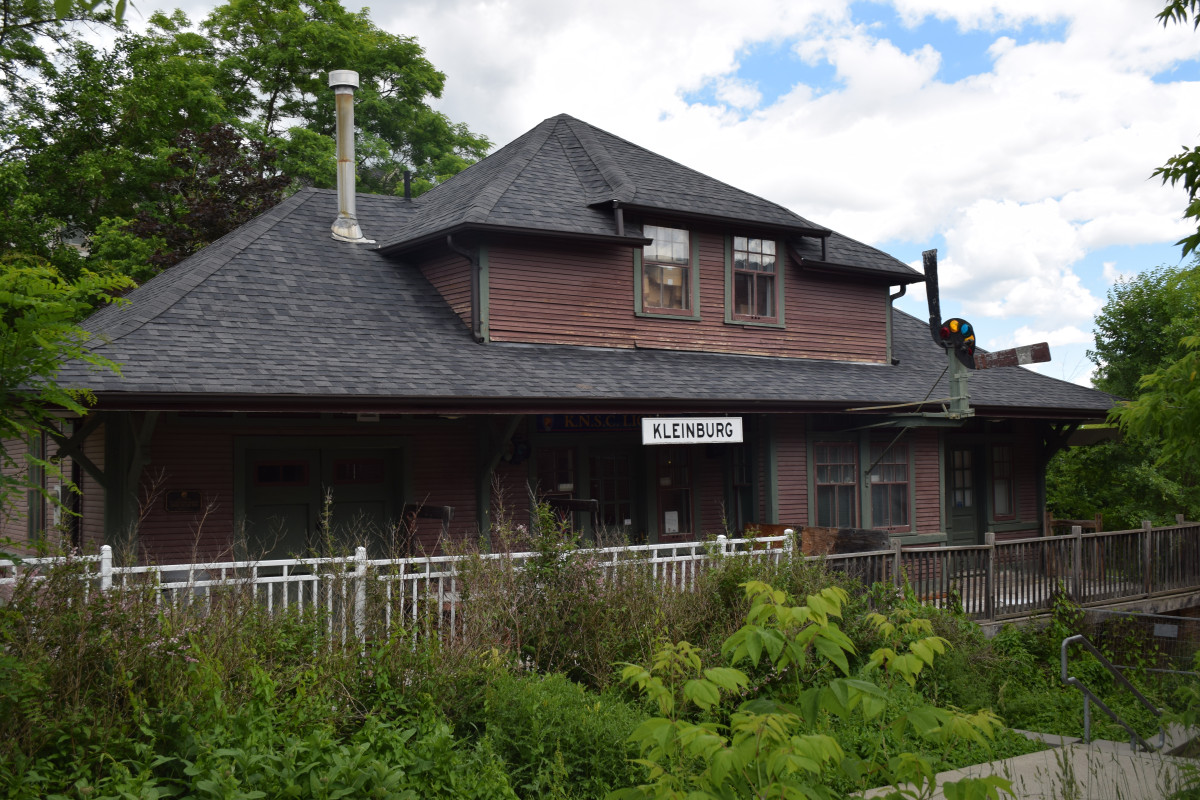
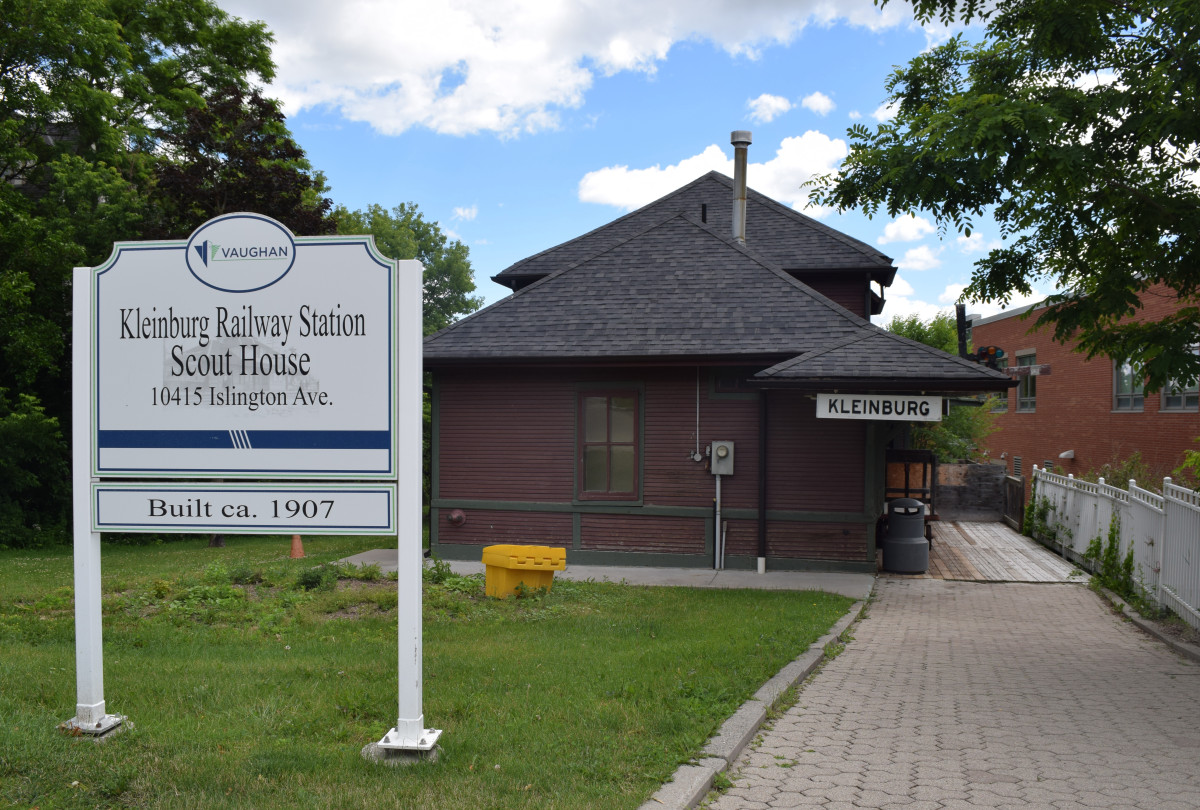
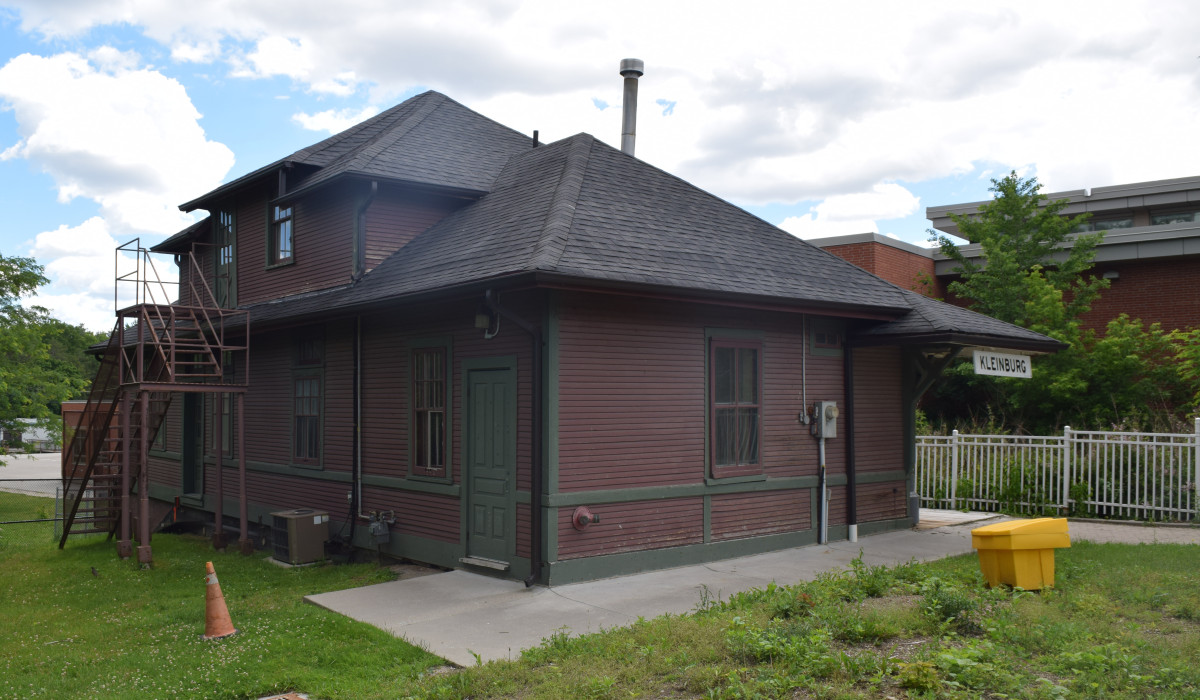
The station remained in its original location for the next 12 years, but records differ on what functions it was used for during this time. By 1976, Canadian history author Pierre Berton, himself a resident of Kleinburg, succeeded in saving the former station from demolition. It was moved east into the town, next to Kleinburg Public School, for use by Scouts Canada, and is now known as the Kleinburg Railway Station Scout House. Two years later, it was officially designated a heritage property under the Ontario Heritage Act.
The freight shed and the original TG&B station were both demolished.
Sources: Kleinburg Railway Scott House | RetrospectiveVaughan, Kleinburg Station – Toronto Railway Historical Association, Kleinburg Railway Stations – Ontario Railway Stations, From the Archives | City of Vaughan.

