

July 2026
Ghost towns are “a once flourishing town wholly or nearly deserted usually as a result of the exhaustion of some natural resource,” as defined by Webster’s Dictionary. There are many such former towns and villages that no longer exist because the population moved away and the buildings were either demolished, destroyed by natural forces, or left a pile of rubble surrounded by unruly vegetation. Other former villages were simply obliterated by their own growth or absorbed by the growth of neighbouring municipalities.
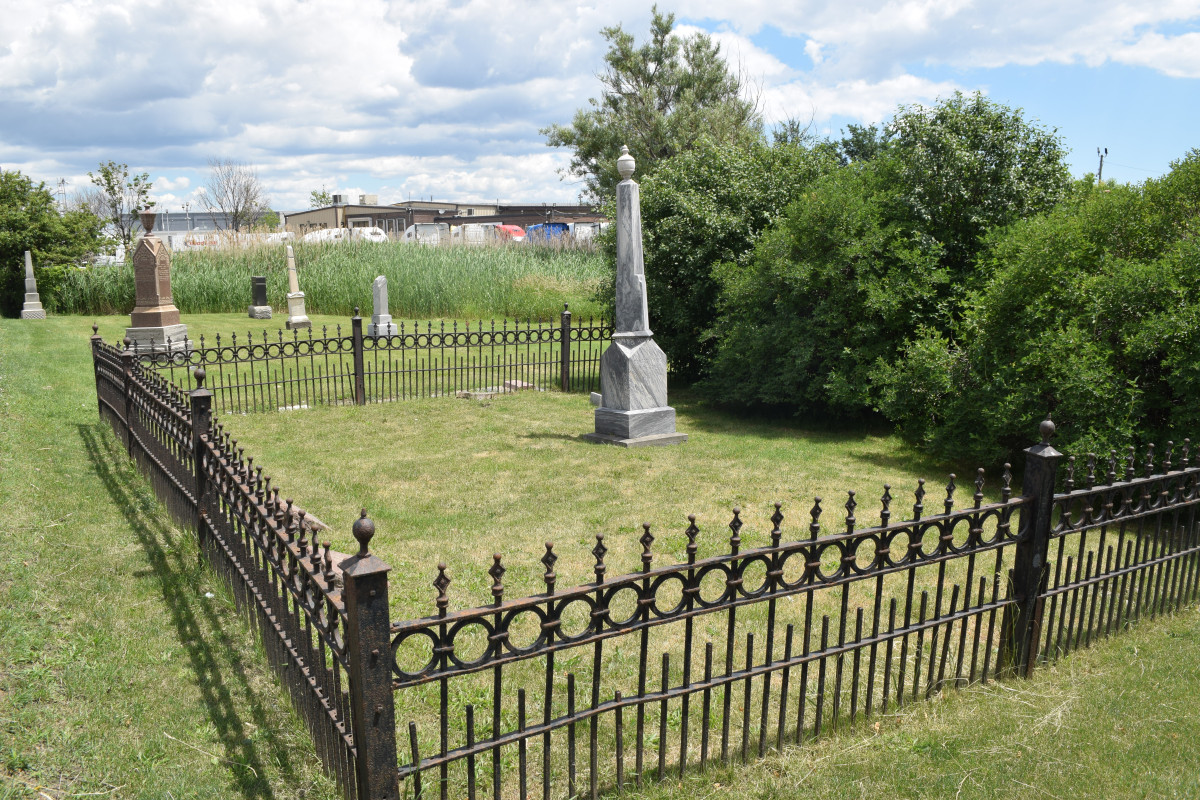
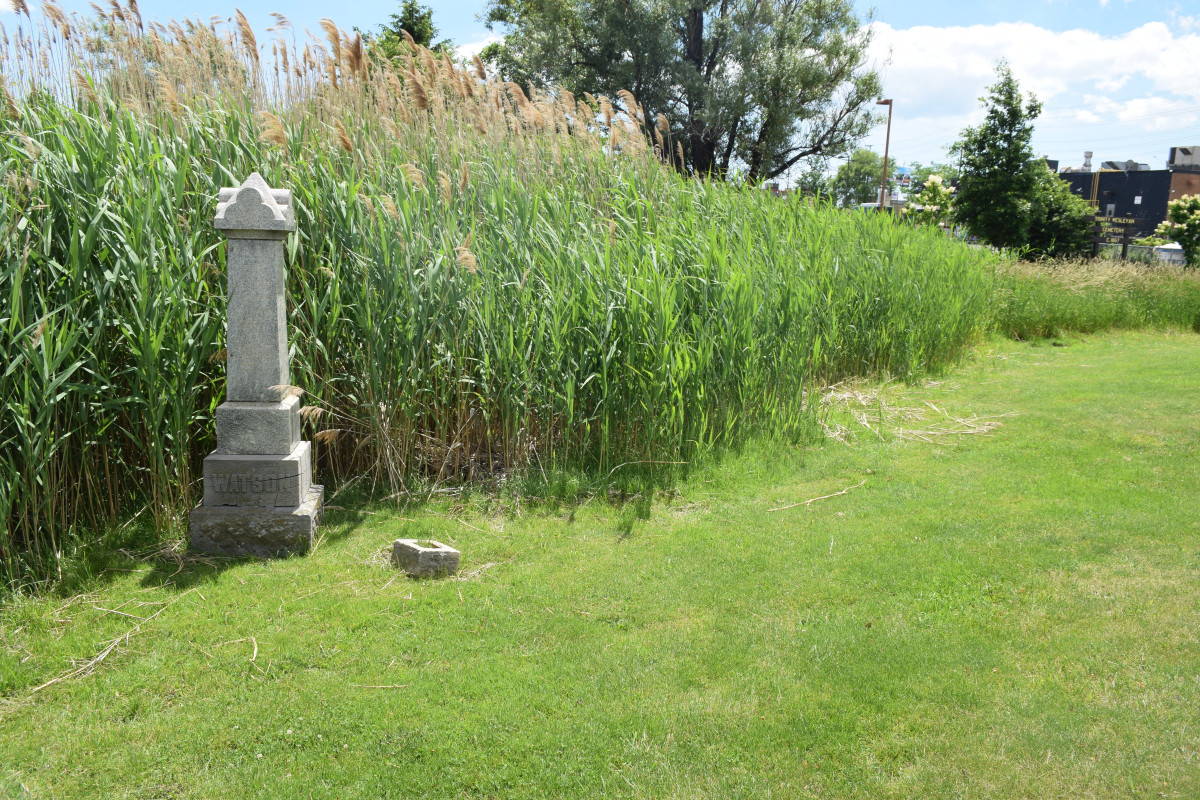
On the south-east corner of the intersection of Dixie Road and Britannia Road, in the southern Ontario city of Mississauga, is a small cemetery, sparsely dotted with aging tombstones cemetery, seemingly out of place in a busy city.
Trinity Wesleyan Methodist Cemetery is all that remains of the vanished village of Hanlan’s Corner. Now a part of Mississauga, the former hamlet sprung up half a mile to the west, at the intersection of Britannia Road and Tomken Road, in the 1830s. The cemetery was established in March 1853, when preacher John Hunt and his wife Sarah sold a section of their land. A small wood frame church was built, known as Hunt’s Chapel. This was replaced with a new church, named Trinity Wesleyan Methodist Church, built immediately to the west of the cemetery in 1867.
As the hamlet grew, it featured amenities such as a general store, post office and a carpenter’s shop, as well as a blacksmith, tinsmith and shoemaker shops. In 1844 a schoolhouse, School Section #11. opened. The schoolhouse was originally built of rough-cut logs, but in 1872 it was replaced by a brick building.
The community was formally named in honour of famed Canadian sculler Edward “Ned” Hanlan in 1878. The name was chosen by George Johnston, the first postmaster, after Hanlan won the Canadian rowing championship the previous year.
By the early 1920s, Hanlan’s Corners was in full decline, having begun the previous decade with the closure of the post office and general store in 1911, the last postmistress being Esther Armstrong. The blacksmith shop and Trinity Wesleyan closed in 1923. The church stood until it was finally demolished 1946. The schoolhouse remained closed in 1957 and was torn down in 1970. Bit by bit, Hanlan disappeared, leaving only the cemetery to tell the story of the forgotten hamlet.
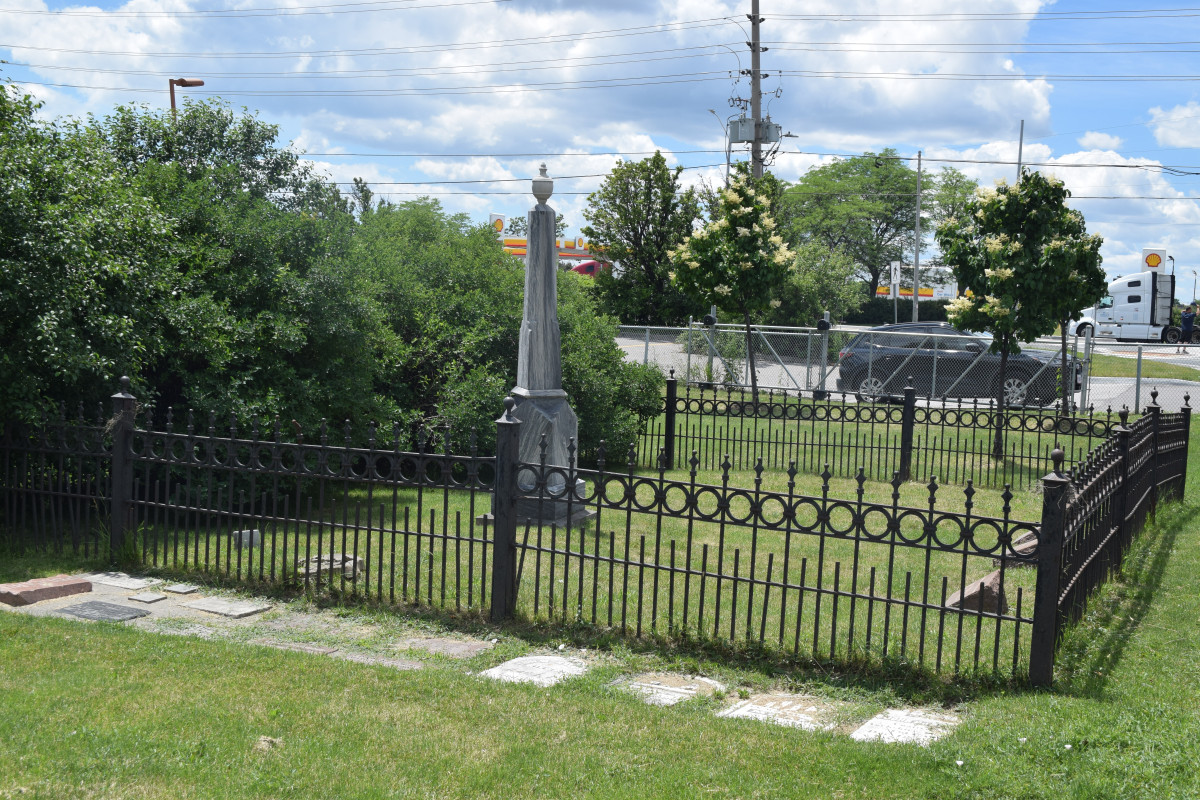
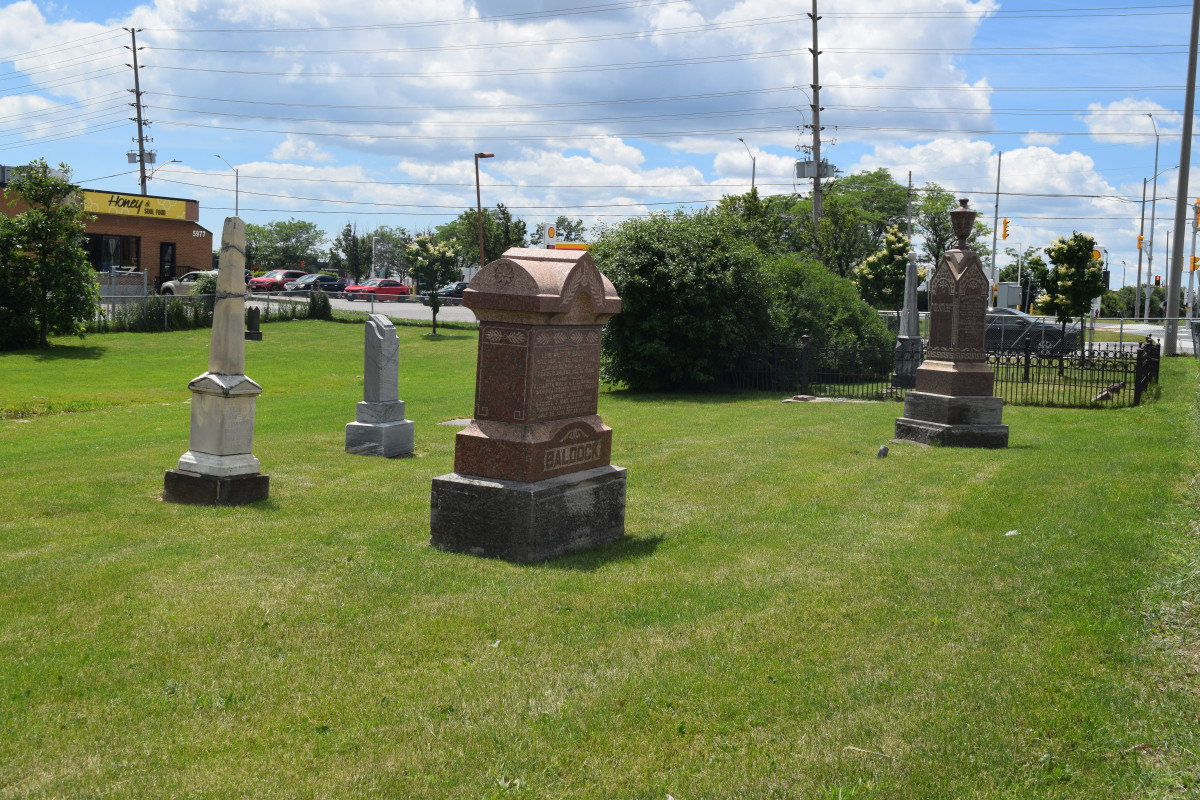
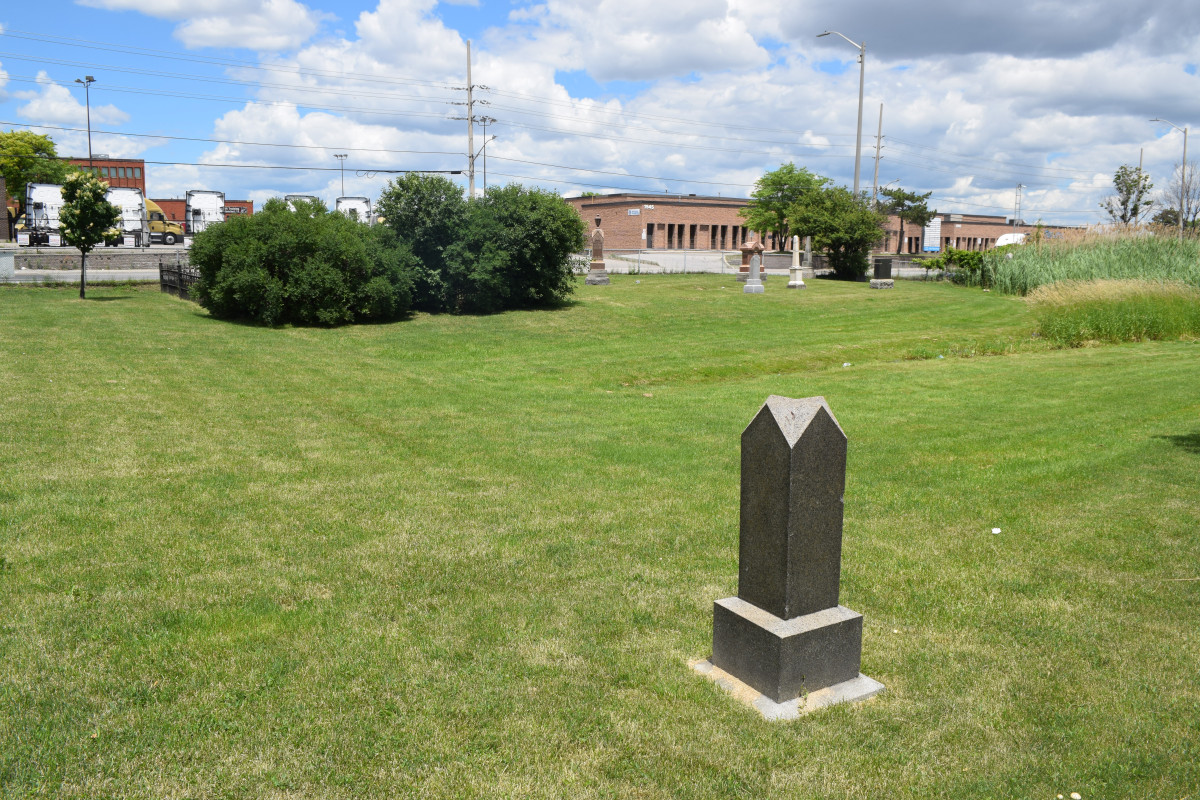
Surrounded by a chain-link fence separating it from the passing traffic, Hanlon’s Cemetery is a bit of an oddity now. It’s a serene, peaceful island caught in the middle of a big, busy city; a grassy patch at odds with the fast food restaurants, gas stations and warehouses encroaching upon it, with the busy international airport just to the east.
The old cemetery is the last resting place for many of the early settlers of what was then known as Toronto Township, including Charles Irvine (1822-1869), a native of England, who was a respected weaver in nearby Mount Charles. He is remembered today by the Charles Irvine Weaver Shop in Black Creek Pioneer Village.
Surviving cemetery records indicate that approximately 63 people were buried in the cemetery, although there may be more graves that have been lost to time when their markers disappeared. The last reported burial was in 1971.
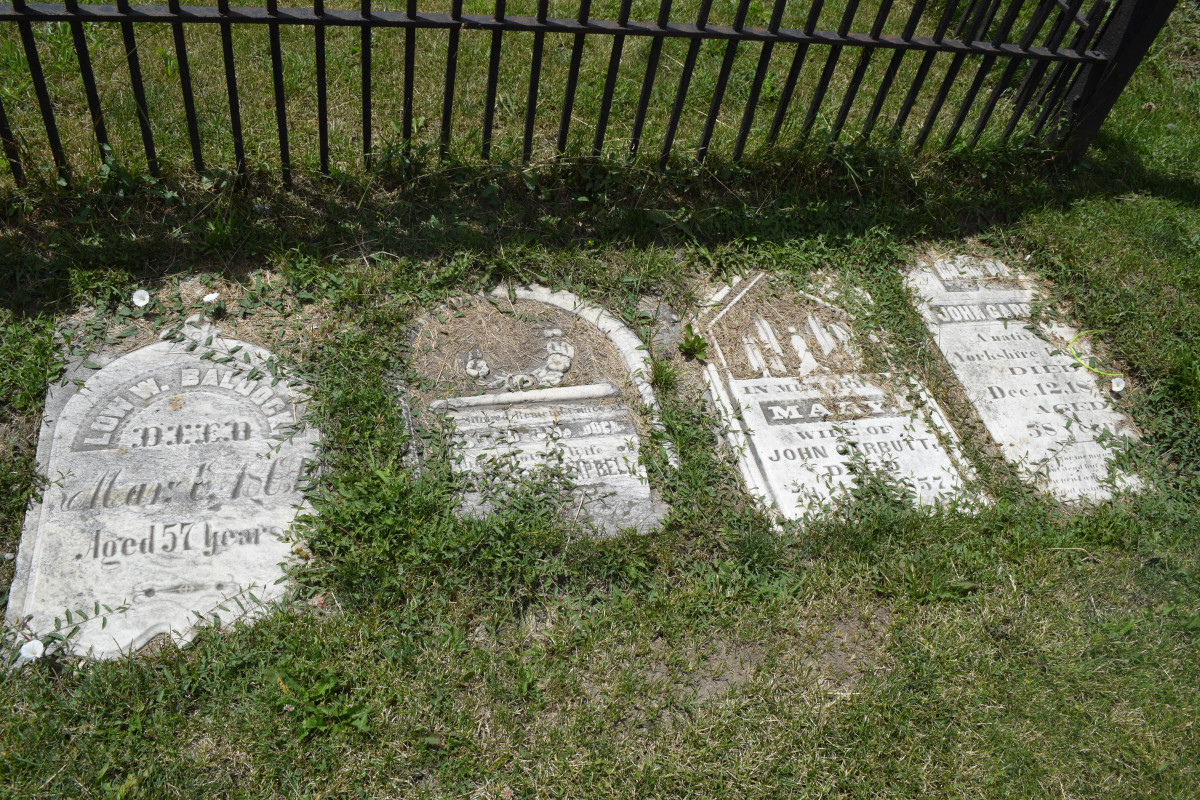
Standing out from the rest of the scattered tombstones is a small family plot, isolated from the others by a wrought-iron fence. Some old stones that couldn’t be matched up with graves have been placed along the outside of the iron fence.
The cemetery is now maintained by the City of Mississauga
Sources: Hanlan’s Corner Cemetery in Mississauga, Hanlon’s Corner Cemetery: Things to Know | Cityseeker, Exploring Mississauga’s Trinity Methodist Cemetery — Modern Mississauga Media.

