

August 2026
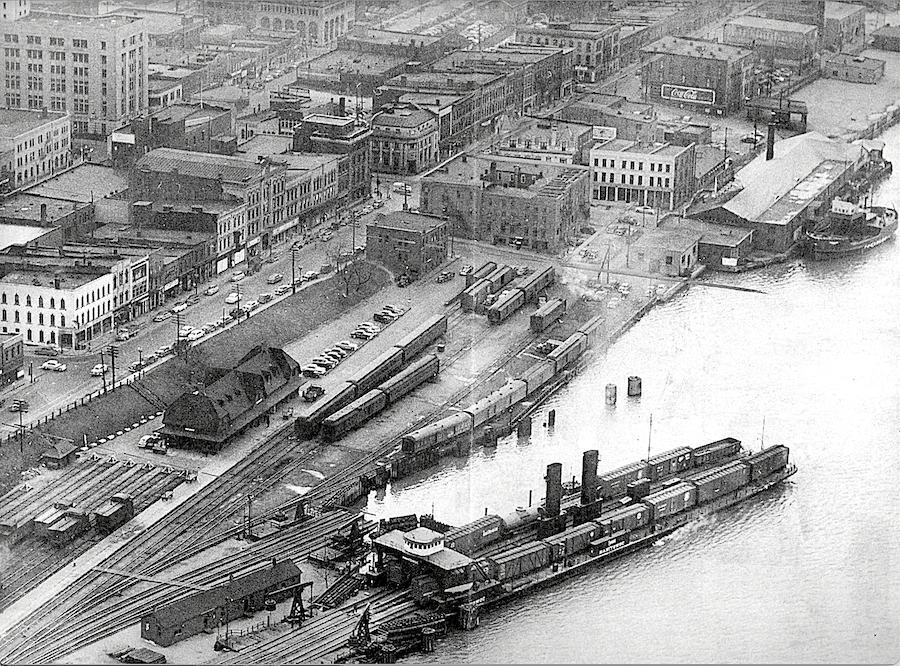
Every day, over $320 million worth of goods cross the Windsor-Detroit border crossing, approximately 25% of trade between Canada and America, primarily across the Ambassador Bridge and the newly-opened Gordie Howe International Bridge, which stand 152 feet above the Detroit River. A railway barge used to carry rail cars across the river, but this ceased in 1994.
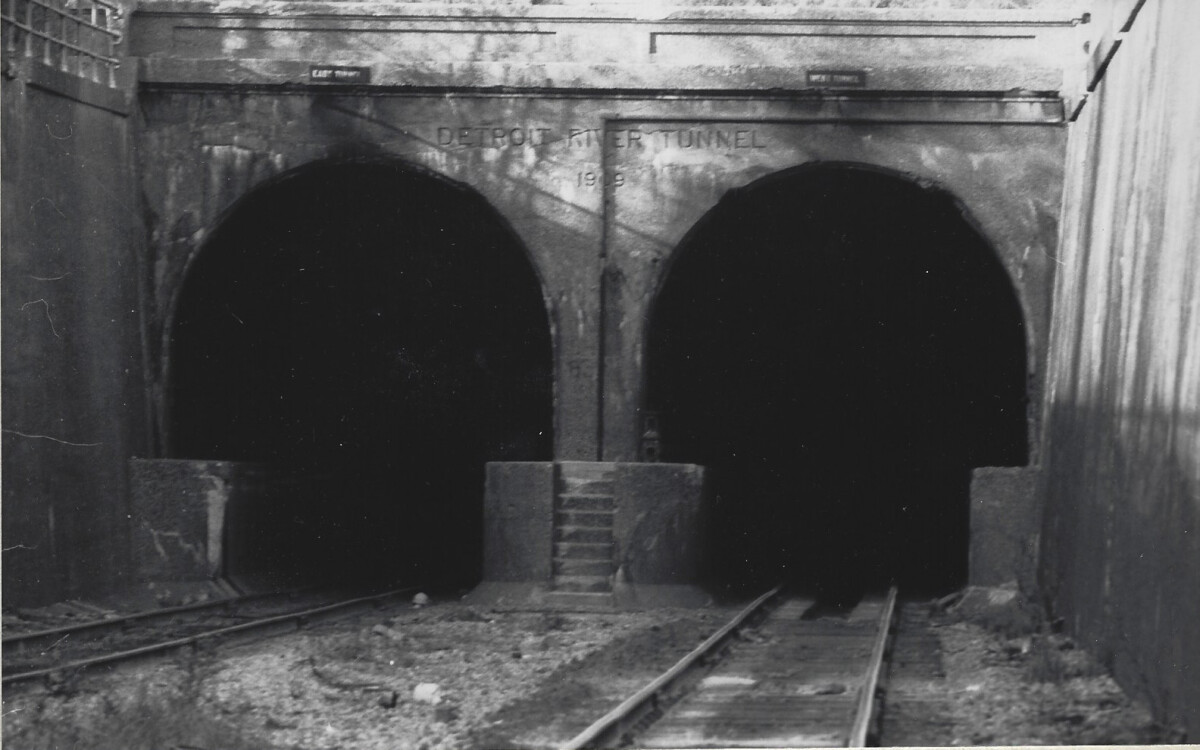
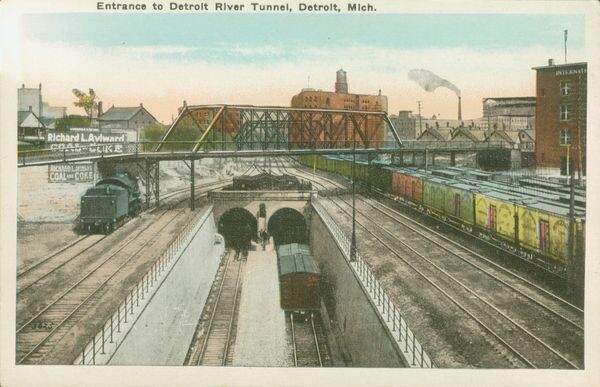
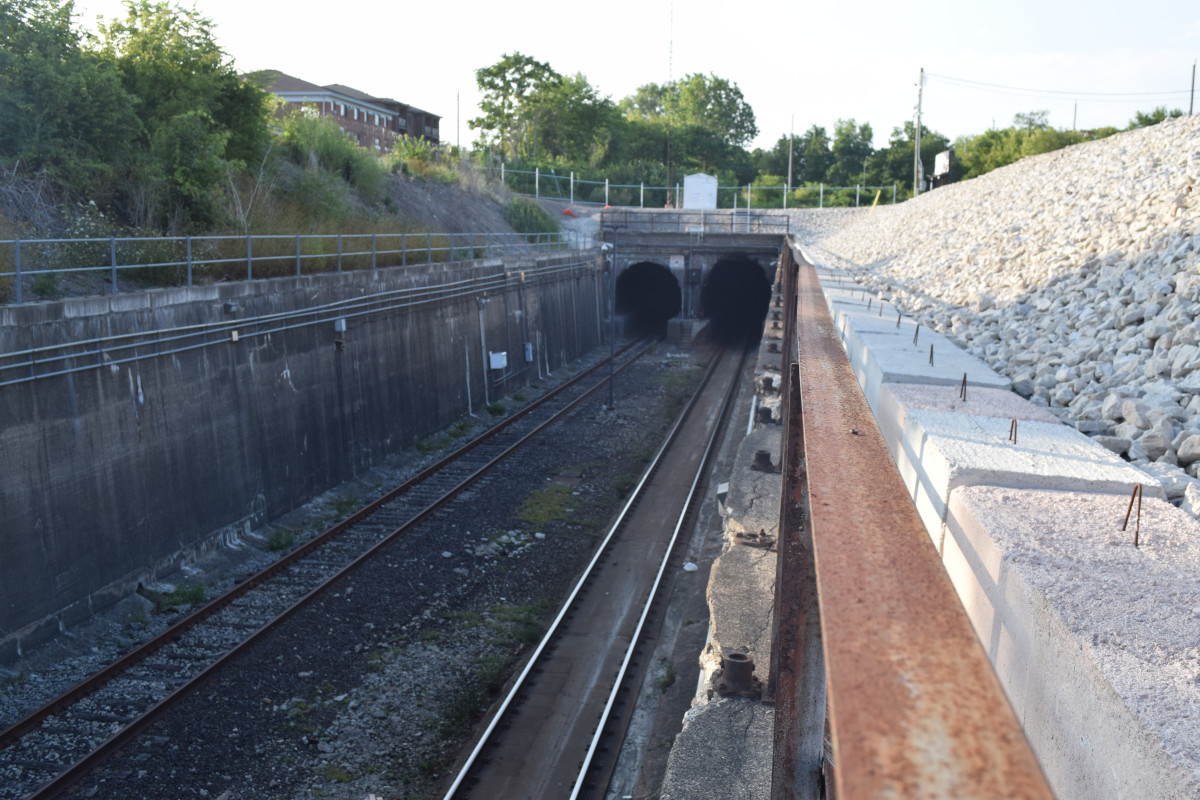
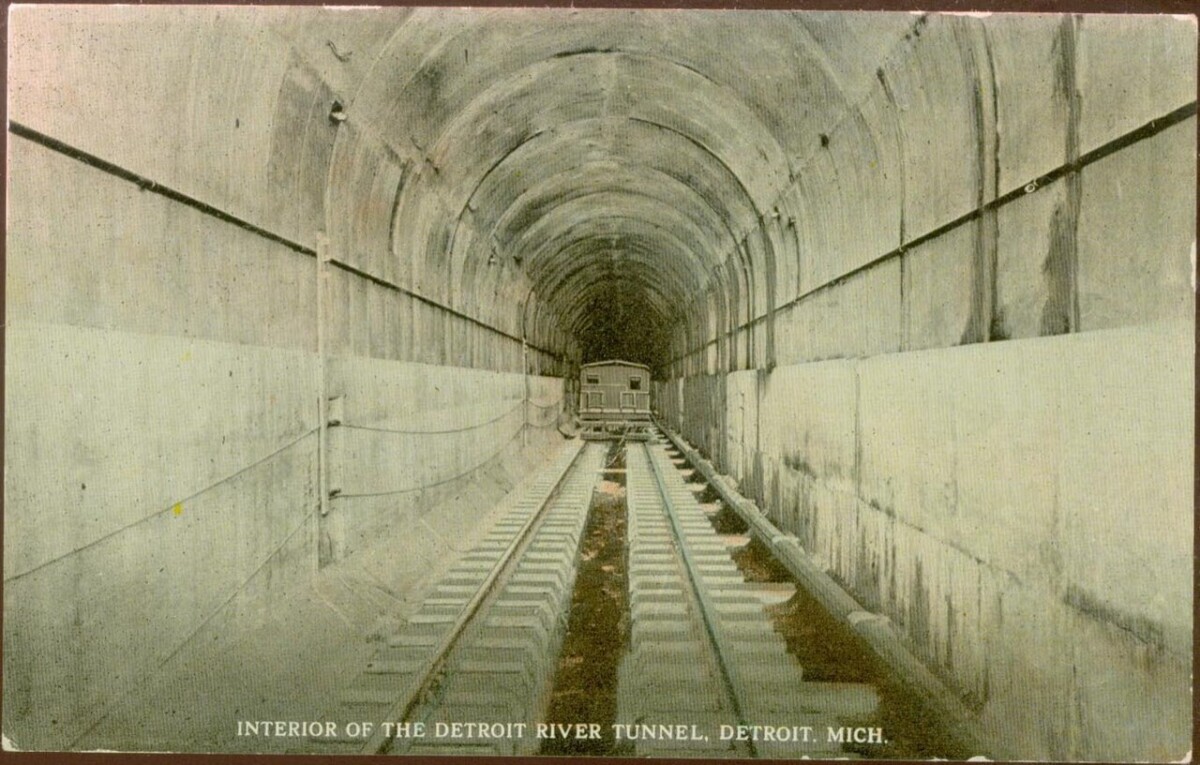
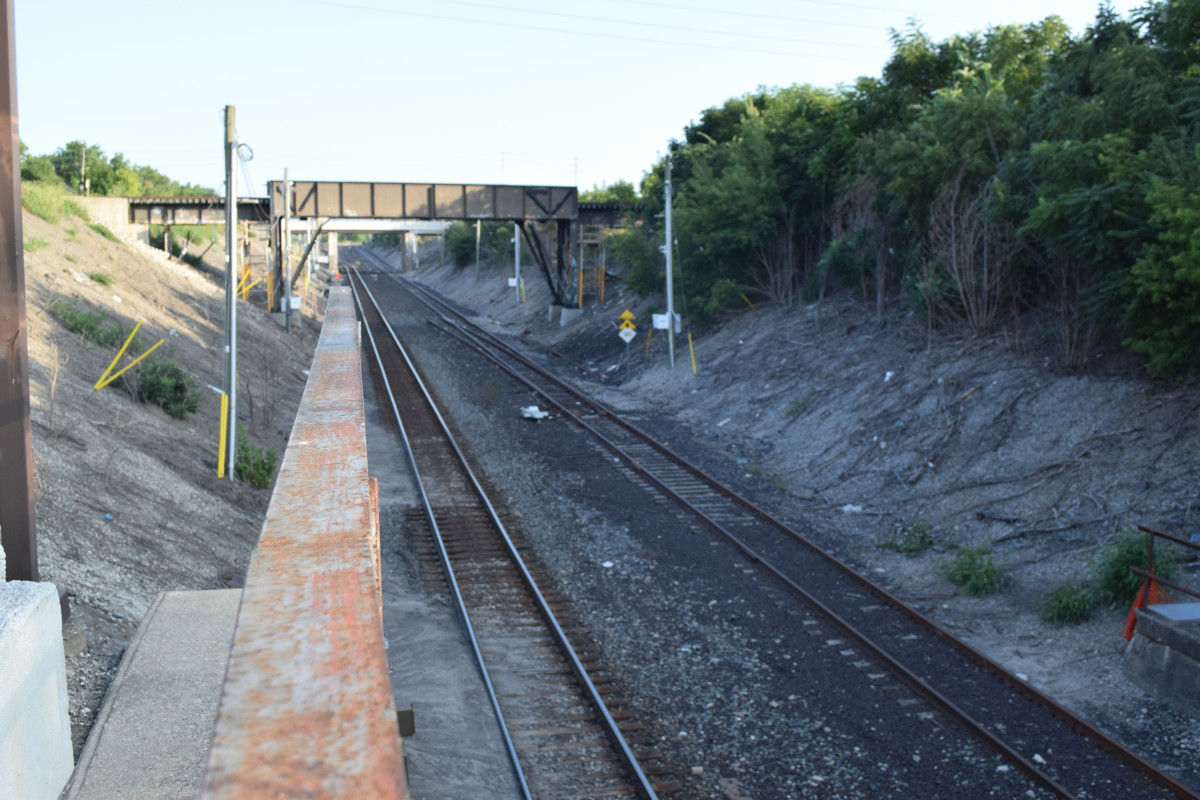
Another way that goods are transported across the border is underneath the Detroit River, through the Detroit River railway tunnel.
Originally known as the Michigan Central Railway Tunnel, the two-line tunnel officially opened for freight service on 16 October 1910, although passenger trains started using the tunnel three months earlier. The 1.6-mile-long tunnel was built for the Canada Southern Railway (CSR) and leased by the Michigan Central Railway. It was the first tunnel built using the immersed tube method, in which tunnel sections are prefabricated and then sunk to the bottom of the river, at a cost of $8,500,000 (around $311, 901, 429 today).
Since its opening, ownership of the tunnel, and the rail line, has changed several times. CSR sold the line and tunnel to Penn Central Railway in 1968, who then sold it to Conrail in 1976.
In 1985, Canadian National Railway (CN) and Canadian Pacific Railway (CP) took joint ownership of the tunnel. It was under CN and CP that the tunnel was enlarged in 1993 to allow larger modern rail cars, such as stacked container cars and auto carriers that were formerly transported across the river by the rail barge.
CN sold their share to Borealis Transportation Infrastructure Trust, a business venture of the Ontario Municipal Employees Retirement System (OMERS) in 2000. Since 2020, the tunnel and line have been owned exclusively by CP, now known as Canadian Pacific Kansas City Railway (CPKC).
In 2010, the Windsor Port Authority, Borealis Infrastructure, and CPKC proposed construction of a new, larger rail tunnel that would accommodate double-stacked train cars. The proposal, called the Continental Rail Gateway, was scrapped in 2015 upon the announcement of the construction of the Gordie Howe International Bridge, which opened to traffic on 27 July 2026.
As a part of the deal with Kansas City Southern Railway when they were acquired by CP Railway, Amtrak would re-introduce their Detroit to Toronto passenger service, a part of Amtrak’s Wolverine service that was discontinued in 1979, using the Detroit River Tunnel. Initial plans called for the resumption of service in early 2022, but this has been delayed until 2027 or 2028.
Sources: https://en.wikipedia.org/wiki/Michigan_Central_Railway_Tunnel, https://www.ambassadorbridge.com/main-page-pb/, https://en.wikipedia.org/wiki/Ambassador_Bridge#Additional_bridge_proposals, https://www.thedieselshop.us/DetRivFerries.HTML, Canada Southern Railway – Wikipedia, Cross-border coalition lays out vision for passenger rail between Ontario, Michigan | CBC News, The Detroit River Tunnel Few Have Seen: The Michigan Central Railway Tunnel | Detroit Historical Society.

